 |
| COTTONBRO STUDIO/PEXELS |
By 2023, government transfer payments to the lowest income quintile totaled roughly 70 percent of their average cash income.
Americans have long heard class warfare rhetoric coming from Democrats — attacks on “the 1 percent,” “millionaires and billionaires,” and similar variations. But this type of rhetoric ignores the welfare state’s perpetual growth.A recent Congressional Budget Office (CBO) analysis illustrates this point. Since 1979 — the year before the “Reagan Revolution,” which supposedly shrank the size of government — government programs and payments to low-income households have continued to grow. By 2023, government transfer payments to the lowest income quintile (i.e., the lowest 20 percent of the population by income) totaled approximately $20,000 per household, or roughly 70 percent of their average cash income of about $28,500 per household.
Health Care Programs
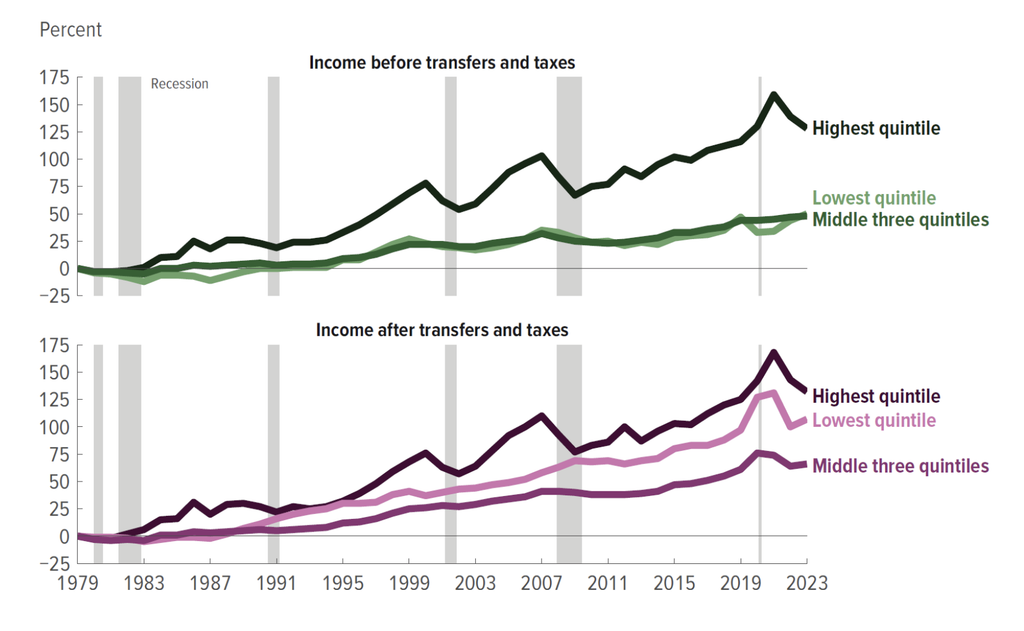
The CBO report examined trendlines in both income and government transfer payments from 1979 through 2023. Looking at income before transfer payments and income after transfer payments provides two very unique pictures, as one slide illustrates:
Income for the top quintile (i.e., the highest-earning 20 percent of households) has grown steadily throughout. But after accounting for government transfer payments, the income for the bottom quintile has grown much faster than the middle three quintiles (i.e., the middle class). That growth has come from a combination of Medicaid and payments through the tax code.
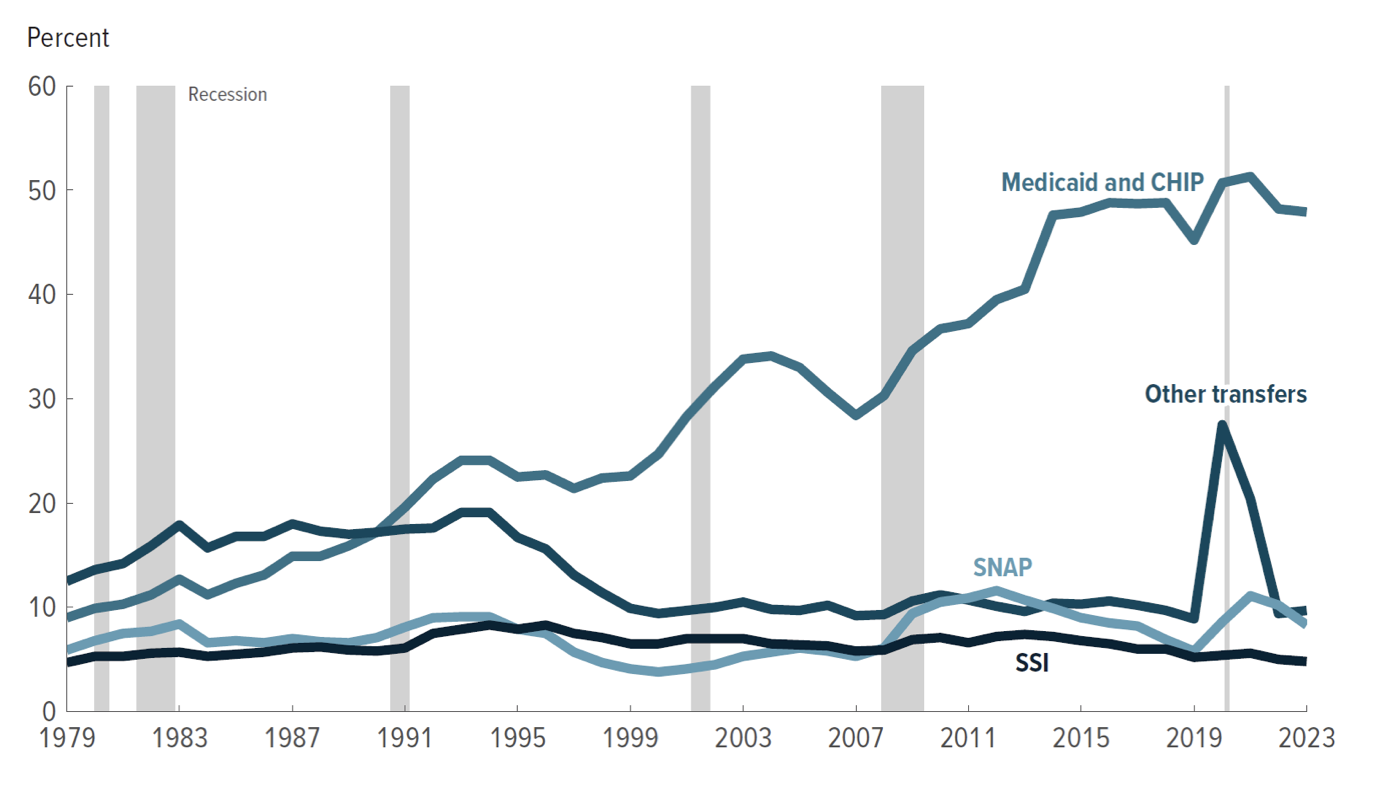
Overall, CBO notes that “from 1979 to 2023, means-tested transfer rates more than doubled among households in the lowest quintile as both the number of people receiving benefits and the average benefit amount per recipient increased.” A separate slide shows the growth in Medicaid over the past four-plus decades: As a percentage of low-income households’ income, Medicaid spending grew from 9 percent in 1979 to nearly half (48 percent) of income before taxes and transfers in 2023.
CBO also noted that in 2023, Covid-related provisions that prevented states from disenrolling Medicaid beneficiaries during the pandemic public health emergency expired, “which put downward pressure on” both Medicaid and SNAP (i.e., food stamp) benefits. If not for the expiration of the pandemic measures, Medicaid spending would have constituted an even higher percentage of low-income households’ income.
Obamacare Tax Subsidies
The other element of an expanded welfare state over the past generation-plus is subsidies provided through the tax code. That category includes programs such as the Earned Income Tax Credit, the child tax credit, and Obamacare Exchange subsidies, all three of which are (to a greater or lesser degree) refundable, meaning that individuals can claim them (i.e., receive a government check) even if they have no income tax liability.
Whereas in 1979, low-income households paid an average of about 8-10 percent of income in federal taxes, now they barely pay any at all: --->READ MORE HERE



No comments:
Post a Comment