 |
| Matilda Wormwood/Pexels |
As long as commercial surrogacy remains available to citizens of adversarial countries, American citizenship can still be acquired through U.S. wombs.
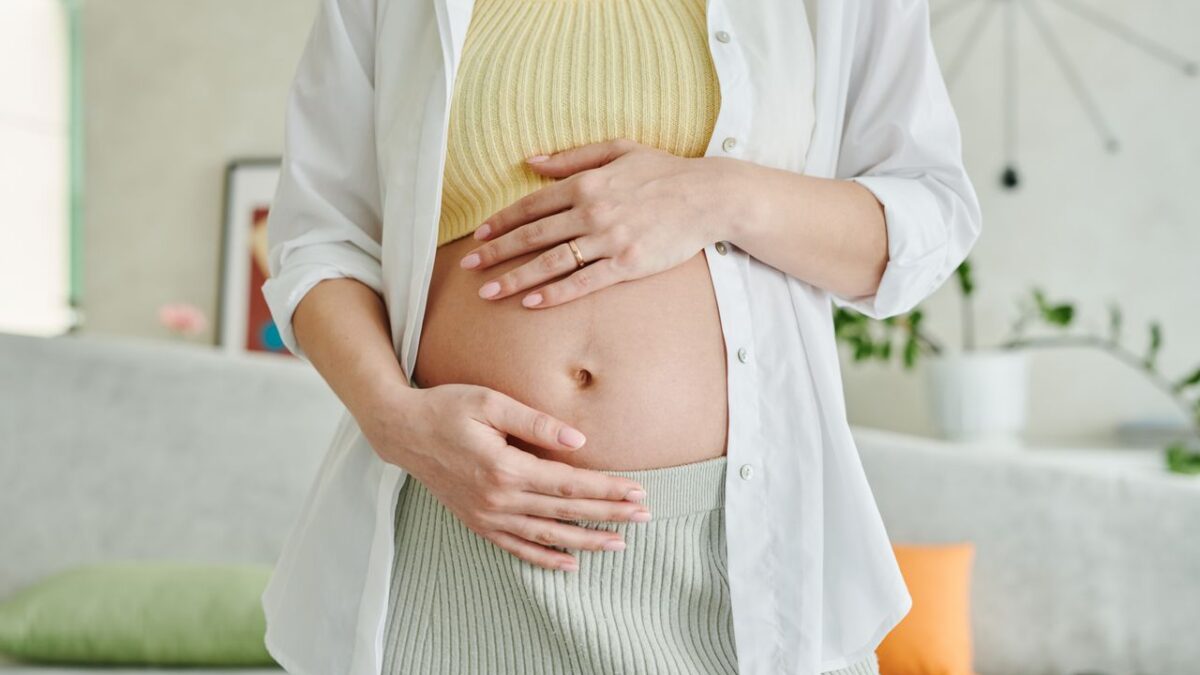
Recent news from China shows that some Chinese women who plan to give birth in the United States solely to secure citizenship for their children are thinking twice after the Trump administration’s crackdown on “birth tourism.”In early August, President Trump signed an executive order called “Ending Birth Tourism.” The order defines “birth tourism” as either a foreign national entering the United States on a nonimmigrant visa to give birth or any attempt by a foreign national to help someone else enter the country for the same reason.
It is difficult to know exactly how many babies are born in the U.S. because of birth tourism, since the government does not keep official records and private estimates differ. In 2020, the Center for Immigration Studies (CIS) estimated there were between 20,000 and 26,000 birth tourism cases.
No official ranking of nationalities for birth tourism exists, but the media often mention Russia, China, Turkey, and Nigeria as common countries of origin. China is cited most often in prominent cases and commercial networks, especially in Southern California, where some packages cost tens of thousands of dollars.
No matter the number of cases or the country of origin, birth tourism has become a profit-driven industry rife with fraud. It has diminished the value of U.S. citizenship by treating it like a “commodity” and thereby breaking “a sacred bond between the American people and the Nation in which they live,” as the executive order states.
The executive order does not create new legislation; it enforces the existing immigration rule that “travel to the United States with the primary purpose of obtaining U.S. citizenship for a child by giving birth in the United States is an impermissible basis for the issuance of a B nonimmigrant visa.” It authorizes the secretaries of state and homeland security to prevent entry or the granting of visas and travel authorizations, revoke existing ones and permanently bar entry, and take action against individuals or organizations (inside or outside the United States) who facilitate the practice.
The State Department responded by creating a Birth Tourism Prevention Task Force. On Aug. 12, the task force announced it had already revoked “more than 600 visas from foreign nationals across the globe to safeguard our nation from this abuse.”
A recent South China Morning Post report shows that news of the executive order, accounts of pregnant Chinese women being turned away at ports of entry, and visa denials for women who previously gave birth in the United States are circulating widely on Chinese social media. This has created uncertainty about U.S. birth plans and led some families to consider alternatives.
It is reported that wealthy Chinese parents often view birth tourism as an investment that gives their children “more options should the need arise.” Many believe U.S. citizenship will make it easier for their children to escape China’s grueling education system, study abroad, and reach their full potential. Hong Wang, the first Chinese female mathematician to win the 2026 Fields Medal for work done in the United States, expressed frustration with that system in an interview that was quickly censored. Her comments sparked intense debate in China over whether she could have achieved the same success at home, reinforcing for many parents the practical value of a U.S. passport.
Even as the Trump administration’s crackdown on birth tourism has produced hesitation, demand for American-born children remains strong. The same report indicates that more wealthy Chinese families may now turn to commercial surrogacy, which is banned in China but less strictly regulated in the U.S., to achieve the same result.
Some of China’s wealthiest individuals have already been linked to troubling surrogacy arrangements. About a year ago, police removed 21 children from a Chinese couple in California who operated a surrogacy agency primarily for themselves. Most of the babies were born to American women who believed they were assisting other Chinese couples with fertility issues. --->READ MORE HERE



No comments:
Post a Comment