 |
| CONCORDIA PUBLISHING HOUSE |
Anyone confused about what God says about marriage and divorce can find clarity — and robust scriptural receipts — in this book.
Everyone living in the West is deeply affected by chronic sexual chaos. It is one of the prime enemies of the American way of life, because citizens who do not grow up with their lifetime-married biological parents are usually less capable of self-government. So are most men and women who do not marry, as marriage naturally and highly develops the self-sacrificial habits required for self-government.The sexual revolution destroying Western societies requires two cornerstone behaviors: nonmarital sex and no-fault divorce. Sex outside of marriage and smashing marriages also swap dependence on taxpayers for private independence within extended families. Conversely, big government reduces the natural consequences of destroying one’s family, by forcing stable families to subsidize self-destructing families through welfare that displaces every personal responsibility under the sun. This is why, as I’ve argued extensively, feminism is an existential crisis for the West.
Those left with the horrifying consequences of this — which is all of us — have little current recourse through our governments, which celebrate and subsidize the sexual revolution. Republicans won’t even promptly defund the nation’s largest child mutilation and murder chain, let alone talk about the gross injustice of no-fault divorce. So what recourse can we have through our families and churches, the other two of the three core social institutions?
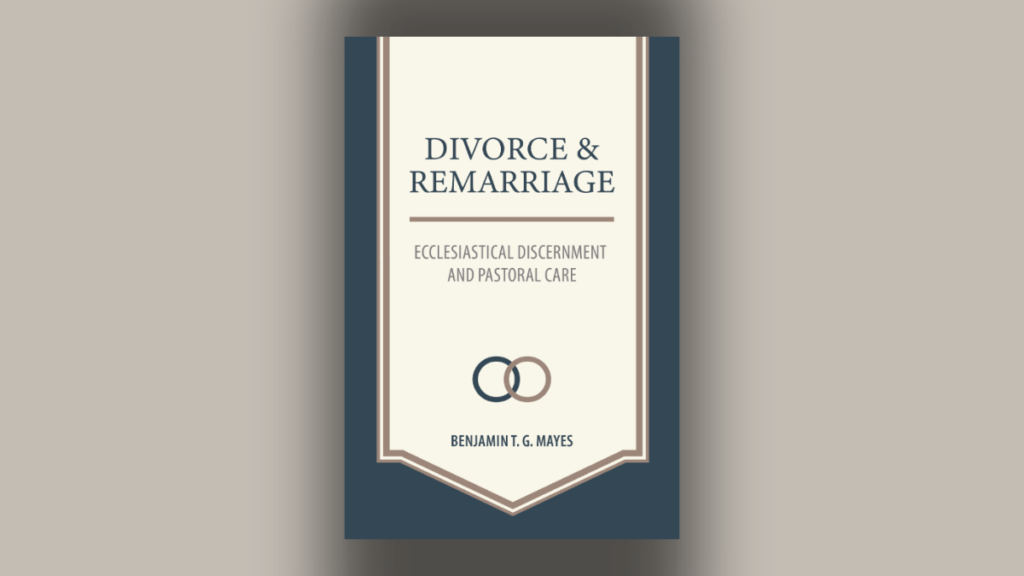
A biblically orthodox Protestant theologian tackles this question and many more in a thorough book coming out July 16, Divorce and Remarriage: Ecclesiastical Discernment and Pastoral Care. The Rev. Dr. Benjamin Mayes, a Lutheran seminary professor, gives refreshingly clear guidance directly from scripture and informed by the church fathers about how churches and families should handle the relationship mayhem humans often make for ourselves.
Churches Ignore God’s Clear Commands
Mayes spends the first half of this book developing and demonstrating what the Bible commands with regard to divorce and remarriage. This is necessary because many Western churches have departed from communicating and enforcing biblical marriage norms.
Roman Catholics comprise the largest Christian denomination in America (Protestants are the majority of American worshippers, but they are divided among denominations). In practice, most self-described Catholics obtain an easy divorce. Three-quarters of divorced Catholics don’t seek an annulment, and one in three who have ever married are divorced, a rate barely different than the general public.
Technically, papists are supposed to get a church annulment before they remarry, but as many Catholics admit, these are frequently granted in the United States for scripturally valid marriages. Almost all annulments sought are granted. Indeed, Mayes demonstrates in the book that some of the Roman Church’s stated grounds for granting annulment are, characteristically, theological innovations with zero basis in God’s Word.
Most Protestants, including pastors, don’t bother with a farcical annulment process to sanction divorces that God forbids. They just pretend nothing happened while parishioners and pew-mates openly ignore God’s commands. While regular church attenders have half the divorce rate of pagans and apostates, data indicates it is still much higher than what is biblically permissible and, like Catholics, every evangelical knows of illicit divorces overlooked or even encouraged by church authorities and congregations.
Two Biblically Valid Justifications for Divorce
Into this chaotic situation, Mayes comes with Thomas Aquinas-like systematic explanations of what the Bible says about divorce and remarriage. Mayes argues, based chiefly on Matthew 5:32, Matthew 19:9, and 1 Corinthians 7:15, among numerous other verses, that the only two grounds for a biblically valid divorce are adultery and “malicious desertion.”
The first half of his book develops this argument. The second half gives practical case studies from the church fathers and pastoral experience showing how to apply biblical principles to often complicated human lives.
Mayes also systematically responds to prominent biblical Protestant perspectives on marriage and divorce. Mayes sidelines theology from apostate (mainline) denominations and papists because for them the Bible is not the chief nor final authority. Even so, this book’s explication of scripture is a strong tacit rebuke to all those professing Christianity who promulgate nonscriptural practices.
What Constitutes Adultery or Desertion?--->READ MORE HERE



No comments:
Post a Comment