 |
| THV11 / YOUTUBE |
Von Spakovsky said that Barrett’s ‘unfortunate’ opinion ‘makes it even more important that the U.S. Senate pass the SAVE Act.’
In siding with their colleagues on the left in a critical election integrity case, Chief Justice John Roberts and Associate Justice Amy Coney Barrett joined forces with the “living Constitution” camp bent on rewriting the Constitution and razing the 250-year-old republic.
Barrett, proving to be more of an OINO — originalist in name only — wrote the 5-4 majority opinion damning U.S. elections to the Californication of ballot counting and further shaking voter confidence in a system wide open to fraud.
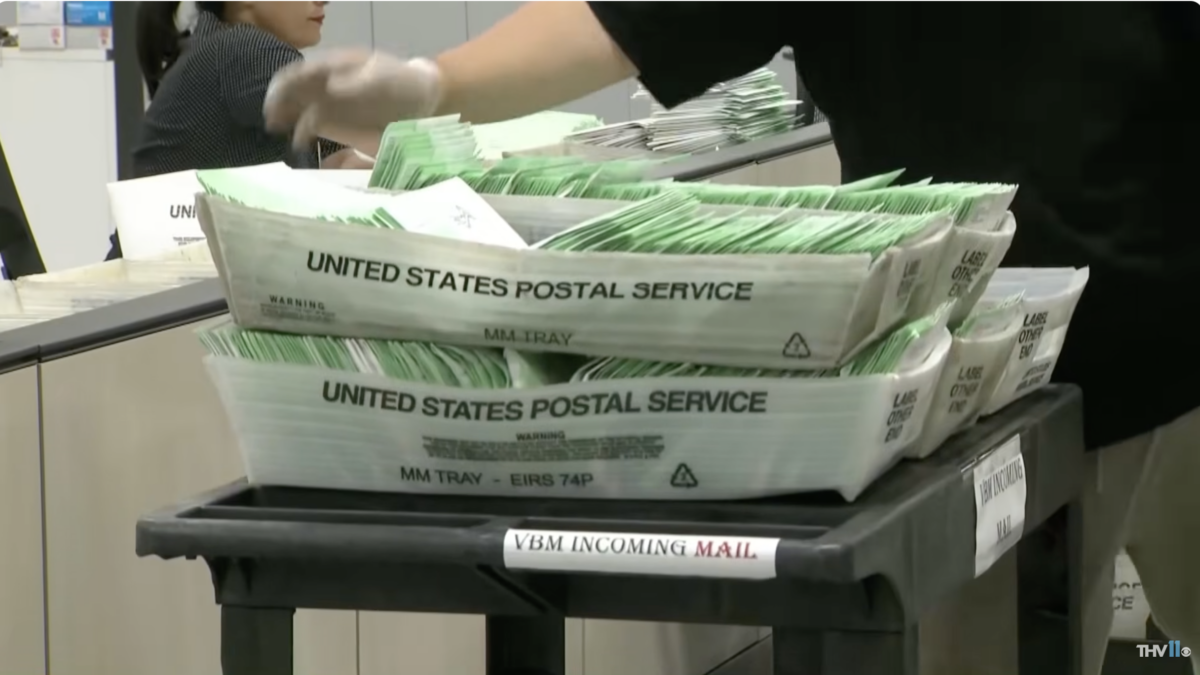
The ruling in RNC v. Mississippi acknowledges that Election Day is indeed Election Day as proscribed by federal law but ruled that the law does not “set a deadline for ballot receipt.” In short, Mississippi can keep collecting ballots days after an election. So can California, which just this month drove home why a prolonged ballot receipt policy is a disaster for election integrity — and the constitutional republic.
The first opinion is in Watson v. RNC, the mail-in ballot case. The court holds that nothing in the federal election-day statutes requires ballots to be received by Election Day in order to be counted. https://t.co/m8satOKkrQ
— SCOTUSblog (@SCOTUSblog) June 29, 2026
“Today’s ruling from the Supreme Court is deeply disappointing and misses the mark. Federal law is clear: all ballots must be received by Election Day to be counted,” Jason Snead, executive director of Honest Elections Project (HEP), said in a statement following Monday’s ruling. “The Court missed a major opportunity to reinforce election integrity and instead sides with California-style chaos.
“As Justice Alito makes clear in his dissent, watching ballots trickle in after Election Day and flip races does nothing but damage public trust in our system of government,” Snead added.
HEP filed a joint amicus brief in the case and also conducted polling that showed 83 percent of Americans surveyed agree that ballots should be received by Election Day, nearly 80 percent affirming that an Election Day deadline would make elections “more secure.”
Hans von Spakovsky, senior legal fellow at Advancing American Freedom, described the opinion as “unfortunate,” asserting that it “demonstrates how much Justice [Samuel] Alito knows about our historical election practices and procedures and how little Justice Barrett … knows and understands.”
“Alito has proved that in numerous opinions he has written on election issues and proved it once again in this case,” von Spakovsky, who served on the Federal Election Commission and as a Department of Justice lawyer, told The Federalist.
The election law expert echoed the sentiments of many in the election integrity movement when he said that Barrett’s “erroneous opinion makes it even more important that the U.S. Senate pass the SAVE Act.”
Bad decision-Supremes-Watson v RNC-Allowing ballots received/counted>Election Day misreads law & allows chaos Congress intended to prevent; Alito dissent right-Barrett opinion inconsistent w/text/historical practice/precedents; will undermine confidence in elections
— Hans von Spakovsky (@HvonSpakovsky) June 29, 2026
‘More Important Than Ever’
But the Republican-controlled U.S. Senate — at least the weak-kneed, weak-willed senators wincing at the threat of long hours — isn’t much interested in working at passing legislation that the vast majority of American voters support. Besides, the light-schedule Senate has already checked out for its July 4 holiday recess. They’re not expected to be back in action until the week of July 13. --->READ MORE HERE
 |
| NBC NEWS / YOUTUBE |
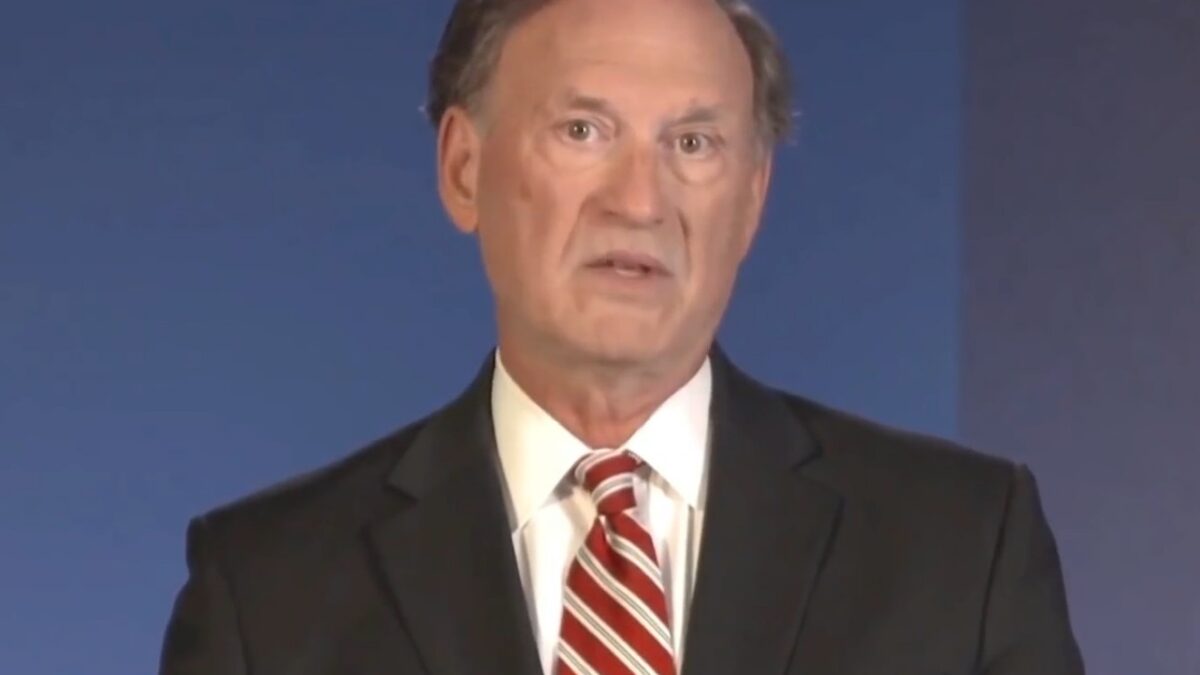
These are the best parts of Alito’s dissent in the Supreme Court’s decision to allow mail-in ballots to flow in after Election Day.
Supreme Court Justice Samuel Alito has authored numerous high-impact majority opinions this term, but the Supreme Court’s ill-advised decision allowing mail-in ballots to be counted days after Election Day gave him the opportunity to nuke that premise from orbit in a dissent.
Monday’s 5-4 decision, in which Chief Justice John Roberts and Justice Amy Coney Barrett joined the three liberals on the court, allowed Mississippi to continue counting ballots received after the federally defined Election Day, offering little by way of defining what an “election” actually is.
Alito took the opportunity to inform the Court’s majority what the term “election” actually means in law, and explain how their decision undermines election integrity and the perceptions that U.S. elections are free and fair.
Election Day Means Election Day
Plain and simple: “Federal law designates ‘the Tuesday next after the first Monday in November’ as ‘election day,’ 3 U. S. C. §21, and provides that elections for federal office must be held on that date,” Alito wrote. There is not much getting around that, but the majority rejected federal statute, history, and precedent to determine that ballots can trickle in and be counted well after Election Day.
The act of voting is a member of the electorate both choosing his preferred candidates and that vote being submitted to the custody of an election official. That means a ballot needs to be in the hands of an election official before the polls are closed in order for someone to have actually “voted” — and statute is unambiguous as to when that is.
“The Court … concludes that the election-day statutes merely require that each individual cast a vote on or before election day. But if that is all that the election-day statutes require, there is no sense in which the electorate as a whole can be seen as making its choice on election day,” Alito wrote. “Rather, the electorate’s choice would be made piecemeal over an extended period prior to election day, and that prospect is blatantly contrary to what the election-day statutes demand.”
Mail-In Ballots Appear Fraudulent Because They’re The Most Fraudulent
Alito quoted Justice Brett Kavanaugh noting that “when ‘thousands of absentee ballots flow in after election day and potentially flip the result of an election,’ ‘charges of a rigged election can explode.'”
But he also went further, explaining how numerous sources have shown how “allowing absentee ballots to pour in over the days and weeks after election day, by which point preliminary election returns are being publicly reported, creates greater opportunity for fraud and risks further undermining the public’s confidence in election integrity.”
The entire chain of custody that maintains any semblance of election integrity is necessarily broken down with absentee voting. It is difficult for officials to verify who has requested and completed a ballot and there is a “greater opportunity for voter manipulation,” he wrote, stating that the Court’s decision “compounds these vulnerabilities.”
Alito also cited the 2005 bipartisan election integrity committee helmed by former President Jimmy Carter and former Secretary of State James Baker as one of multiple sources to find that “absentee voting was ‘the largest source of potential voter fraud’ in American elections.”
Finding Late Ballots Is How Lyndon Johnson Stole His Senate Election --->READ MORE HERE
If you like what you see, please "Like" and/or Follow us on FACEBOOK here, GETTR here, and TWITTER here.

No comments:
Post a Comment