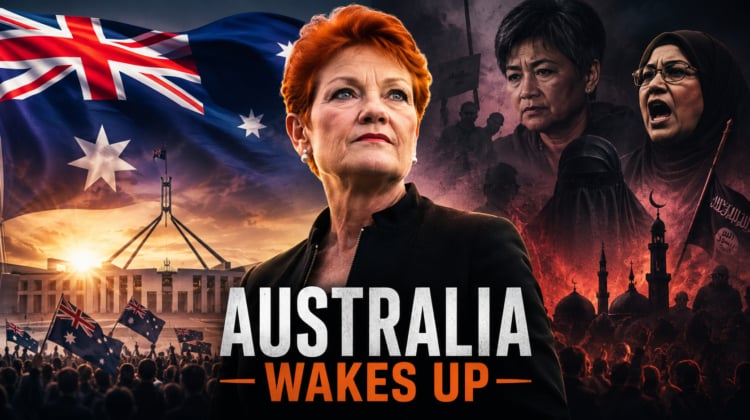
“That is what they want — a world caliphate. And I am not going to apologize.”
In March, Australia’s ruling Labor regime censured Senator Pauline Hanson for opposing bringing ISIS members to Australia. According to the senate censure resolution, Hanson’s “inflammatory and divisive comments seeking to vilify Muslim Australians, which do not reflect the opinions of the Australian Senate or the Australian people” who are supposed to love ISIS.
Whether or not the Australian people support Islamic terrorists, the way that the ruling Labor leftist government does, is a matter for the people to decide. And Labor was panicking badly because polls showed that the Australian people were making the ‘wrong’ decision.
The censure bid had been a desperate effort by the left-wing regime to slow down the rise of Hanson, who started out as a barmaid and working in a fish and chip shop, and her patriotic One Nation party which had been polling higher and higher as the public becomes disgusted with PM Anthony Albanese’s corrupt failed government, its lies and its surrender to Islam.
After the latest round of condemnations, Hanson said that she’s sorry if she “offended anyone out there that doesn’t believe in sharia law, or multiple marriages, or wants to bring ISIS brides in, or people from Gaza that believe in a caliphate… but that is what they want — a world caliphate. And I am not going to apologise … I will have my say now before it’s too late.”
Despite, or perhaps because of, the censure resolution, One Nation scored the second highest number of votes in an election in South Australia, giving it a number of candidates. In May, One Nation won its first lower-house seat and polls now speculate that it might be able to form a minority government. Some are describing the populist rise of One Nation as marking the end of Australia’s two-party system.
Thirty years after the more conservative Liberal Party had disavowed Hanson over her opposition to affirmative action for supposed ‘aboriginals’ (quite often white people falsely claiming aboriginal ancestry, much like Sen. Elizabeth Warren in the United States, leading to the bizarre preponderance of ‘fair-skinned white aboriginals’ in academia) and mass migration from Pakistan, Bangladesh, Indonesia and other neighboring parts of the Islamic world, Liberal voters are choosing One Nation much the way that UK conservatives are looking for options.
Penny Wong, the Malaysian gay immigrant serving as Anthony Albanese’s Minister for Foreign Affairs (representing a joke that no one is allowed to make) had championed Hanson’s censure, contending that she was “sending a message to the people of faith in this country” that “condemning an entire religion is not acceptable.” Unless of course it’s Christianity.
Wong had previously ranted about Christian ‘religious fundamentalists’, complaining about “the application of religious belief to the framing of law in a secular society” and accusing Christians of “deploying the power of the state to enforce one set of religious beliefs”.
“Religion-based moral codes continue to limit the freedoms and the rights of those who, in the view of religious groups, do not ‘conform’ to their views,” Wong had objected.
Then Wong had hypocritically turned around and demanded a censure of Hanson after the patriotic leader had denounced a Pakistani Muslim politician’s contempt for the Anglosphere. --->READ MORE HERE
 |
| REUTERS |
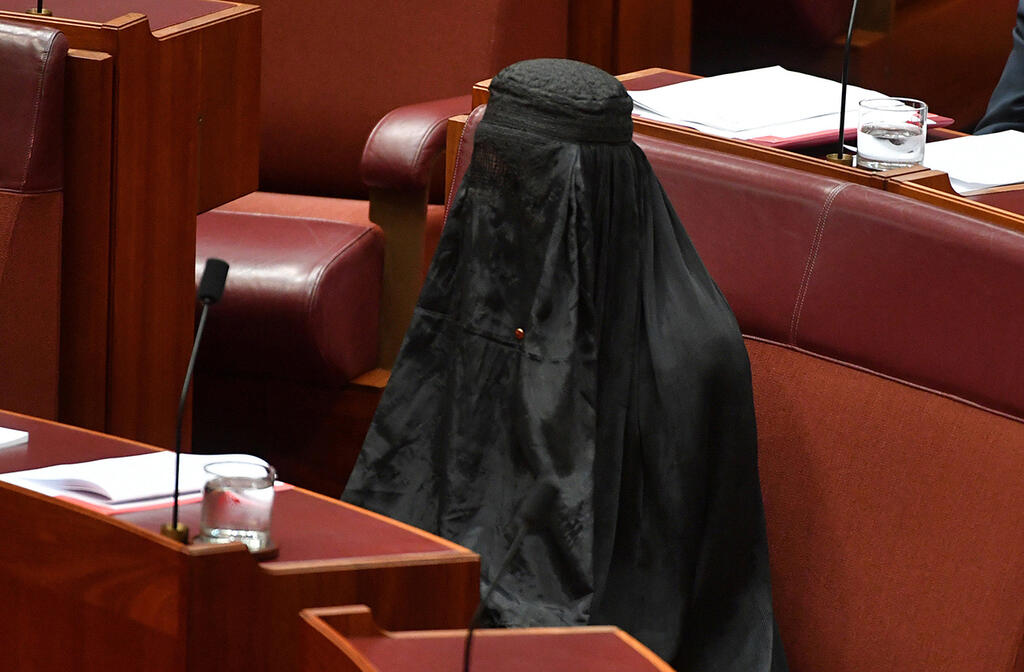
30 years after founding the anti-immigration One Nation party, Pauline Hanson is recording a historic rise, with one poll projecting her party as Australia’s largest opposition force; critics say voter anger over the economy, not only ideology, is driving the surge
A new poll in Australia points to the continued rise of Pauline Hanson’s One Nation, the hard-right party widely viewed as far-right. According to the survey, if elections were held today, Hanson’s party, a fierce opponent of Muslim immigration to Australia, would increase its strength to 53 seats in the House of Representatives and formally become the largest opposition party.
The results of the RedBridge Group and Accent Research poll mean the center-left Labor Party, now in government, would shrink to 76 seats, leaving it on the edge of losing its outright majority in the 151-seat House of Representatives. In a more extreme scenario, Labor would fall below that threshold and be left at most with the possibility of forming a minority government.
Australia’s last federal election was held in 2025. Labor, which currently governs, won 34.6% of first-preference votes. The traditional center-right bloc, known as the Coalition, won 31.8% and found itself in opposition, while Hanson’s One Nation received only 6.4% and did not win a single seat. The next federal election is expected no earlier than May 2028.
Under Australia’s electoral system, voters do not choose only one party. They rank candidates on the ballot in order of preference. In the first stage of counting, officials examine how many voters marked a particular candidate or party as their first choice. If no candidate wins an outright majority at that stage, the lowest-ranked candidates are gradually eliminated and their votes are transferred to the remaining candidates according to voters’ later preferences.
According to the RedBridge poll, if elections were held today, One Nation would grow from one seat to 53 and, in its most optimistic scenario, reach 59. The traditional center-right opposition bloc would fall to just 12 seats, all of them held by the Liberal Party, while the National Party would be wiped out entirely. Labor would drop from 94 seats to 76, exactly the number needed for a majority, but a dangerously narrow figure that would make governing difficult. In the most pessimistic scenario, Labor would fall to 70 seats.
Some in Australia have played down the poll’s significance and criticized its methodology, but it follows other surveys pointing to a dramatic rise in One Nation’s support. A DemosAU poll for Capital Brief found that 28% of voters would now mark One Nation as their first preference, putting it ahead of Labor for the first time. Labor would receive 26%, while the traditional center-right bloc would receive 23%. The poll also claimed that 17% of those who voted for Labor in 2025 said they would now vote for Hanson’s party. --->READ MORE HERE
If you like what you see, please "Like" and/or Follow us on FACEBOOK here, GETTR here, and TWITTER here.

No comments:
Post a Comment