 |
| Santa Carota Ranch |
A rancher creating a bespoke protein product has no direct control over the way his cows become meat.
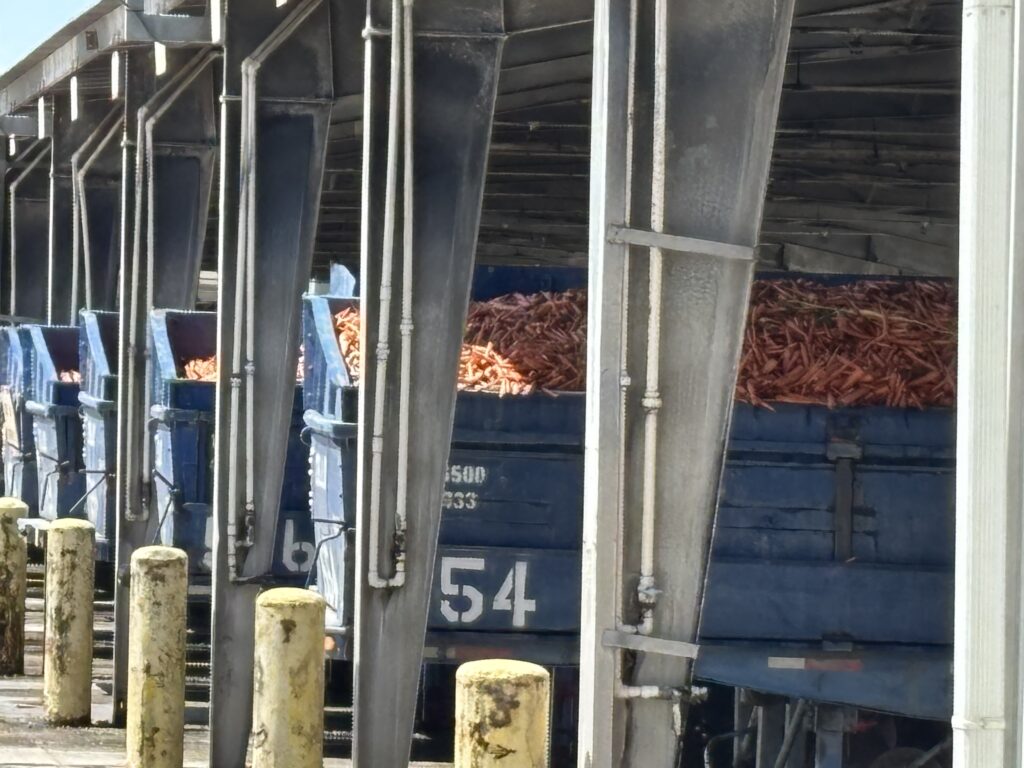
The meat on your plate has to overcome a long line of barriers to get there, and those barriers limit what you can buy in ways that you might not have noticed. They also mean that your family might be eating mystery meat, sold as something different than the product you think you bought.If you drive to Justin Pettit’s California ranch, out in the hills on the east side of Bakersfield, you’ll pass truck after truck loaded with carrots. They stop just down the road, at processing plants run by food industry players like Bolthouse Farms.
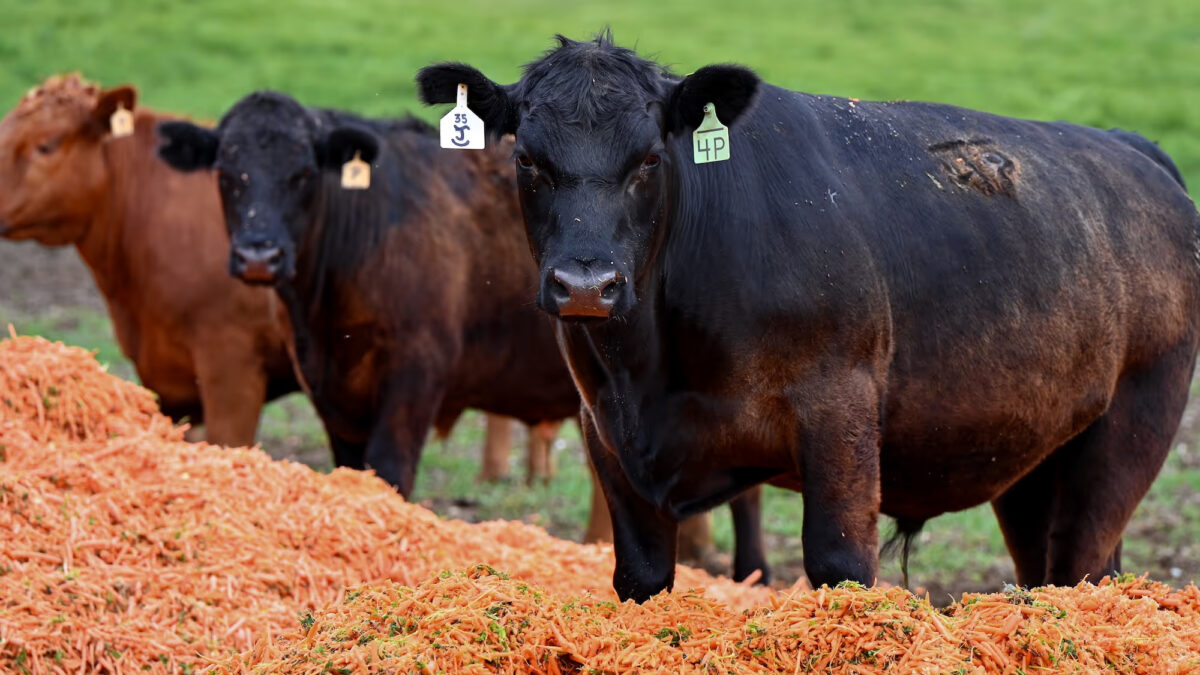
Chris Bray for The Federalist The giant Central Valley carrot processors end up with tons of waste, a mix of trimmings and rejected carrots that are too ugly for the supermarket. Pettit feeds those carrots to cows, finishing grass-fed beef with a sweet and moist crop that changes the flavor of the nutrient-dense meat. Beef cattle are usually finished – fattened for slaughter – with corn. No one else in the world does what Santa Carota Ranch does, giving them a unique product in a market driven by standardization and corporate mass production. And for now, after years of success and then years of crisis, you mostly can’t buy their product.
For Pettit, the story of what happened to Santa Carota is a story about the barriers to entry in protein markets, and the way those barriers limit supply and product differentiation. Entering the market for beef, he told The Federalist, is like “trying to merge into 80 mile-per-hour traffic on your bicycle.”
Pettit began selling carrot-finished ground beef to a California restaurant chain before the pandemic. Food safety regulations effectively limit the number of beef processors, so Santa Carota’s cows had to leave the Central Valley to be slaughtered in the industrial suburbs of Los Angeles. A processor stood between the supplier and the end user, taking orders from the restaurants and telling the rancher how many head of cattle to truck down to the slaughterhouse to meet the weekly demand.
The story that follows is a set of contested allegations, challenged in court by the processor, and it looks like they’re about to be tested in front of a jury. Barring a settlement, trial is scheduled for August. The processor, Sterling Pacific Meat Company, hasn’t responded to a request for comment from The Federalist.
As the restaurant chain consumed a growing amount of ground beef for its burgers, Santa Carota was left with the rest of the cow, the highest-quality cuts that don’t go into the grinder. So they began selling carrot-finished ribeyes and other steaks to the fine dining industry, becoming a supplier to premium buyers like the Wynn hotel in Las Vegas.
Then the orders for ground beef started drying up, Pettit says, or seemed to. The meat processor sent for fewer and fewer cows, and then called Pettit at the end of 2023 to say that they didn’t need any. They already had enough Santa Carota product on hand to address the ongoing demand for ground beef from the restaurants.
The losses cascaded: Fewer cattle being slaughtered for ground beef meant the loss of steaks to sell to the fine dining clients. So those orders started to disappear.
“We couldn’t kill cattle just for ribeye,” Petit told The Federalist, sitting at a table next to the Santa Carota barn. “And if you’re sold out for so long, you’re off the menu. Once you’re on the menu, you’ve got to fight to keep your spot on the menu.”
Finally, at a meeting in suburban Los Angeles with executives at the restaurant chain that bought Santa Carota’s ground beef for burgers, Pettit brought up the sharp decline in the orders. The people at the restaurant chain didn’t know what he was talking about. Pettit says they showed him their purchase orders with the meat processor, which showed that the restaurants had received “way more pounds of ground beef than us at Santa Carota had actually supplied.” The gap between orders appeared to add up to half a million pounds of meat, at what was then a wholesale price averaging $3.40 a pound to the original supplier.
Pettit could only see one possible explanation: “The only conclusion we could come to was that Sterling Pacific was providing product other than ours in the ground beef batches.”
A grower creating a bespoke protein product has no direct control over the way his cows, or any other animal, become meat. The industry is built on the presence of a middleman, the processing companies. A rancher ships cows to the front of the slaughterhouse, and then meat comes out the back. What happens in between is an open question, and Pettit suspects that mixed product is far more common than consumers realize: An order for 10,000 pounds of certified Angus beef might be 7,000 pounds of Angus and 3,000 pounds of whatever.
“I think that’s happening across the board,” Pettit told The Federalist. “I’ve talked to other producers that feel that’s happening to them the same way.” --->READ MORE HERE



No comments:
Post a Comment