 |
| Thomas Brading/Public Domain |
The 14th Amendment’s Citizenship Clause contains a word that definitively excludes birth tourists: ‘reside.’
This week, the Supreme Court heard oral arguments in Trump v. Barbara, the most consequential immigration case in decades. The case was brought by the American Civil Liberties Union (ACLU) on behalf of a Honduran national challenging President Trump’s executive order denying citizenship to children born to illegal immigrants and tourists with temporary visas. The question posed was whether the 14th Amendment’s Citizenship Clause guarantees automatic citizenship to every child born on American soil, no matter who the parents are or why they are in the United States.The 14th Amendment was adopted in post-Civil War 1868 to secure citizenship for freed slaves and their children. But who else is covered? Does that phrase cover children of illegal immigrants, tourists, or temporary visa holders? The prevailing interpretation has been that it does, and that it only excludes children of foreign diplomats, invading soldiers, and members of Native American tribes. (In the case of the latter, Congress passed legislation granting citizenship, just as it did for children born abroad to American parents who are not automatically covered by the 14th Amendment.)
The Key Word
Much of the debate has focused on whether a child is “subject to the jurisdiction” of the United States. But one word in the Citizenship Clause has largely escaped scrutiny: reside.
Here is the clause in full:
“All persons born or naturalized in the United States, and subject to the jurisdiction thereof, are citizens of the United States and of the State wherein they reside.”
Perhaps because it comes at the end, it has been treated as an afterthought, but careful reading shows how central the term “reside” is. The clause does not say “are born,” “are physically present,” or “pass through on a tourist visa.” Citizenship is granted only to those who actually “reside,” establishing a precondition for the clause’s application, with “reside” carrying a consistent legal meaning across many areas of American law, including taxes, jury duty, voting, school enrollment, in-state tuition, and family law. It refers to an established, settled presence, in other words, a place where you actually live.
During oral arguments at the Supreme Court, “reside” and its significance drew limited discussion. When the term did come up, it was in relation to the related concept of “domicile,” a term that appears repeatedly in Wong Kim Ark (1898), the leading Supreme Court precedent on the question of birthright citizenship. In that case, a man born to Chinese parents who were legally resident in the U.S. was initially denied citizenship. The Supreme Court reversed that decision, applying the 14th Amendment and emphasizing that his parents had “permanent domicile and residence in the United States.”
Although it is rarely presented this way, a plain reading of the Citizenship Clause creates a two-part test for eligibility. First, is the person “subject to the jurisdiction” of the United States, and second, does the person “reside” in one of the states, with “state” generally understood to include not just the 50 states but also D.C. and other federal territories. Framed this way, the discussion becomes far simpler than the jumble on display in the Supreme Court hearing, where everyone chased their own pet ideas. It is even more efficient when turned around so that the “reside” test comes first, because that is easier to resolve, and if someone does not reside, there is no need to even consider “subject to the jurisdiction.”
Birth Tourism
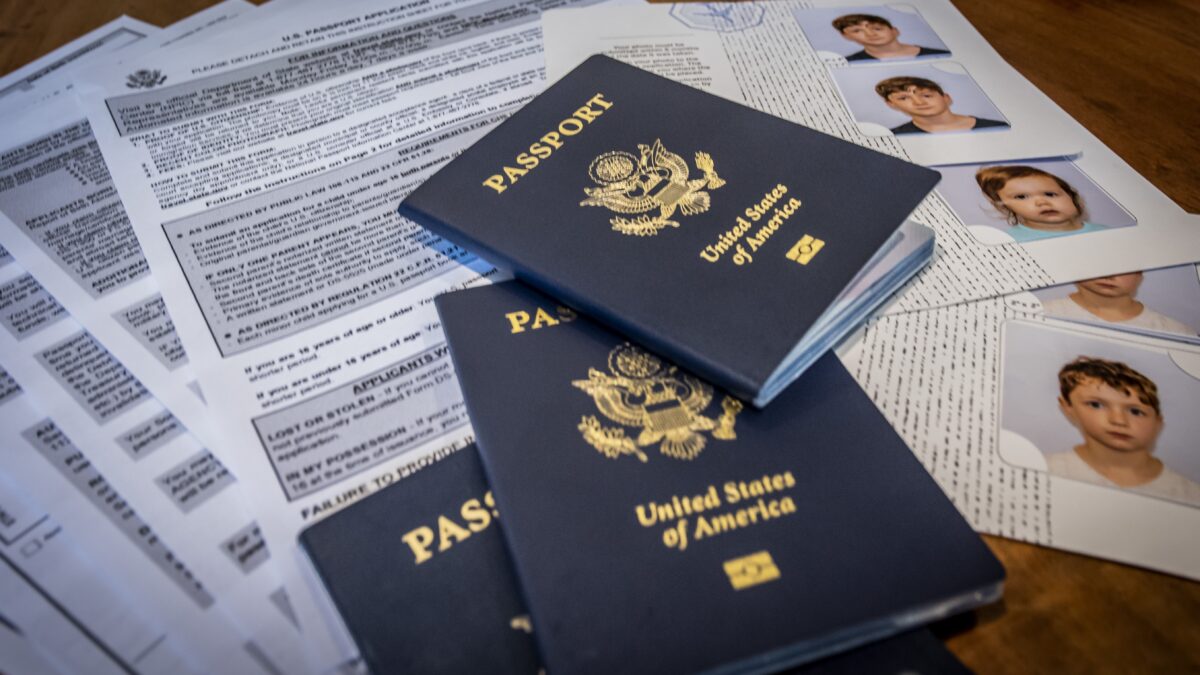
Birth tourism, especially from China, has grown into a large industry. Agencies market packages to pregnant women who travel to the United States in their third trimester, deliver a child, get a U.S. passport, and fly home. These people do not reside in the United States by any definition or any stretch of the imagination. There is no residency, no home, no lease or mortgage, no driver’s license, no vehicle registration, no neighbors, no family doctor, no bank accounts, no pets, and no children in school. The mother arrives on a tourist visa and leaves with a child. Their connection to the United States begins at the arrival gate and ends at the departure terminal on the return flight.
Even under the notoriously aggressive California Franchise Tax Board, people are not considered residents if they are in California temporarily or for a transitory purpose, exactly like birth tourists.This provides a clean, textual basis for limiting birthright citizenship without wading into the interpretive mess that dominates the debate, and there is no question that any honest justice who reads the 14th Amendment would find so.
Illegal Immigrants --->READ MORE HERE



No comments:
Post a Comment