 |
| AP/YOUTUBE |
Whatever our theological differences, our common enemy is the radical left, which seeks to persecute Christians of all kinds.
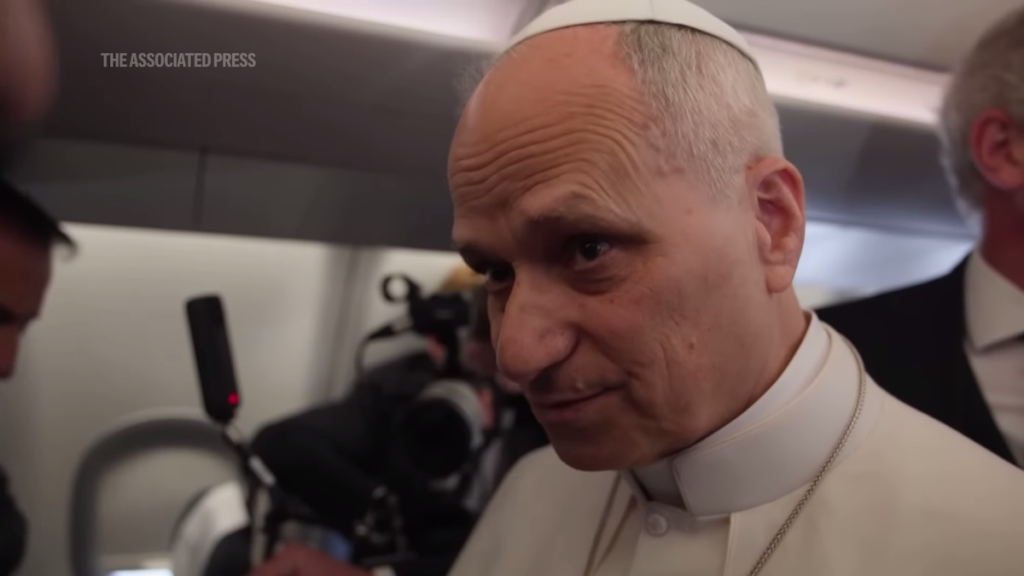
The theological fault lines that divide America’s 50 million or so Catholics from its roughly 130 million Protestants have been largely set aside when it comes to politics in the Trump era, if only because most practicing Christians in the United States understand they have a common foe in the secular left. When Democrats are openly trying to drive all forms of Christian piety from the public square and impose what amounts to a neopagan morality, it tends to focus one’s attention on the near enemy.But not this week. President Trump’s diatribe against Pope Leo over the weekend and the ensuing fallout triggered an online fracas between Catholics and Protestants that exposed those fault lines and called into question the durability of the conservative coalition that has twice sent Trump to the White House.
Many Catholics were understandably outraged at Trump’s crude attack on Pope Leo for opposing both the Iran war and his administration’s immigration policies. Catholics of course believe the pope is the spiritual father of the faithful, and to some extent the Catholic reaction against Trump’s attack was an expression of filial piety. But there was also a sense that Trump was simply being unfair. That the leader of the Catholic Church would oppose a war of choice by the United States shouldn’t come as a surprise. In 2003, an aged Pope John Paul II forcefully opposed the Iraq war in terms similar to those Pope Leo has used: “War is not always inevitable. It is always a defeat for humanity. International law, honest dialogue, solidarity between States, the noble exercise of diplomacy: these are methods worthy of individuals and nations in resolving their differences.”
For their part, many Protestants were rankled by the Vatican’s criticism of the Trump administration and thought Pope Leo had it coming. Some noted, not unfairly, that the pope never seems to speak as sharply or specifically about Democrat presidents who flout Catholic teaching on abortion, gay marriage, and much else. Others simply lambasted the pope as a hippie or a commie — essentially deploying the same brain-dead invective as the president did. Still others expressed the misguided opinion that the pope should stick to religion and stay out of politics, forgetting that politics concerns morality and justice and the ultimate ends of man, and therefore implicates religion. (And how could any religious leader “stay out of politics” when the American president threatens to destroy “an entire civilization?”)
This was the immediate context for the online sniping between Catholics and Protestants this week, but the sniping is part of a growing tension between the two groups over theological differences. We saw this over the Easter holiday, for example, amid reports of record numbers of adult Catholic conversions. We see it, too, in the discourse over Christian Nationalism and the ongoing debates about Christian Zionism and antisemitism.
Some of this tension is simply a consequence of social media. But much of it is the natural consequence of the collapse of political liberalism, which is exposing old religious disputes as the West enters an era of re-enchantment. Much of the Catholic-Protestant dustup between Trump and Pope Leo was really a debate over temporal power and spiritual authority. Liberalism falsely claims to have resolved that age-old tension but it obviously hasn’t, and now it’s reappearing. As religion regains its salience in American public life, so too will the religious differences between Catholics and Protestants. That could pose a political problem for conservatives in both religious camps that have, over the past decade, managed to overcome their theological differences and coalesce around a Trumpist GOP.
I myself am a Catholic convert from evangelical Protestantism, so I’m thoroughly acquainted with these differences. They are deep and persistent and in some ways unbridgeable. But I say this with all conviction and sincerity: We have to set them aside right now — if not for the sake of brotherly comity then for the sake of common survival. Simply put, the left is waiting to eat us alive. In an era of Republican governance it’s easy to forget that half the country, more or less, rejects our religious convictions and worldview. That includes a significant cohort that’s actively hostile towards the Christian faith. Whatever our inter-Christian conflicts, they pale in comparison to the conflict awaiting us when Democrats take power again.
And unlike Christians, leftist ideologues have no qualms about using coercive force to compel belief, or at least compliance, with their secular religion. Everywhere they wield power today, in fact, they are pursuing coercive force against Christians.
In New York, an order of Catholic nuns that has spent more than a century caring for the dying poor has been forced to sue Gov. Kathy Hochul over a new law that would force the nuns to affirm and submit to LGBT ideology that contradicts their Catholic faith. The Dominican Sisters of Hawthorne have quietly cared for dying cancer patients for 125 years at Rosary Hill Home in Mount Pleasant, about 30 miles northeast of Manhattan. They have done so without problems — until two years ago, when they began receiving letters from the state’s public health agency accusing them of violating a 2023 state law requiring long-term care facilities to affirm residents’ gender identity, use preferred pronouns, and open bathrooms to either sex. --->READ MORE HERE



No comments:
Post a Comment