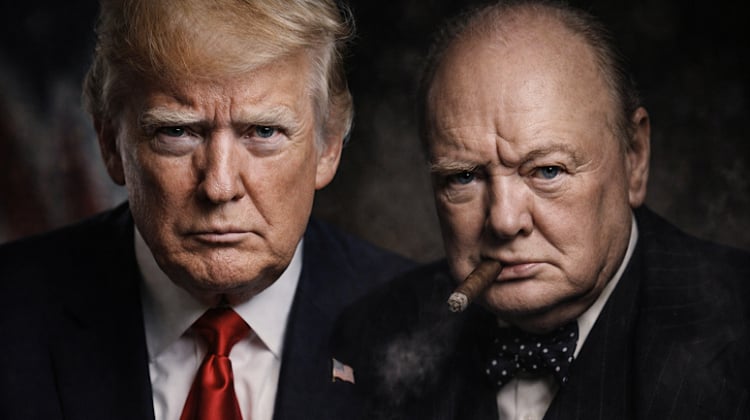
Diplomacy without consequence is a strategy for surrender.
“No nation can afford to disregard the law of self-preservation.”— Theodore Roosevelt, Fear God and Take Your Own Part (1916)
President Theodore Roosevelt understood what modern statesmen sometimes prefer to forget: survival is not sentimental. It is not negotiated into permanence by good intentions. Civilizations endure because, at decisive moments, they recognize danger clearly and act. History does not punish strength; it punishes enervating hesitation.
Since the Islamic Revolution of 1979, the regime in Tehran has defined itself not merely as a government but as a revolutionary project. The seizure of the American embassy and the 444-day hostage crisis were not aberrations; they were foundational signals. The new regime fused Islamic theology and state power, institutionalized hostility toward Israel and the United States, and declared the export of revolution a sacred obligation. Over the decades that followed, that obligation took concrete form.
In 1983, Iranian-backed operatives bombed the U.S. Marine barracks in Beirut, killing 241 American servicemen. Hezbollah emerged not simply as a Lebanese faction but as a fully armed proxy army funded, trained, and directed through Iran’s Islamic Revolutionary Guard Corps and its Quds Force. Tehran armed and financed Hamas in Gaza, supplied precision munitions to Hezbollah in Lebanon, and entrenched militias across Iraq and Syria. In Yemen, the Houthis became another lever of pressure, extending Iranian reach into the Red Sea. This was not passive regional influence, it was strategic encirclement.
Through proxies, Tehran destabilized states while maintaining plausible deniability. Through ideology, it framed its hostility as moral inevitability. Through time, it normalized the abnormal, and at the center of this revolutionary architecture lay the nuclear question.
For years, Iran insisted that its enrichment program was exclusively civilian in purpose. Following protracted diplomatic negotiations that spanned years, international IAEA inspectors gained limited access to Iranian facilities. Sanctions were imposed, lifted, recalibrated. The Joint Comprehensive Plan of Action (JCPOA) temporarily constrained aspects of the program, but sunset provisions and verification disputes left unresolved the deeper issue: whether a revolutionary regime that openly declared hostility could be trusted with threshold nuclear capability.
While protracted diplomacy ensued, centrifuges spun and enrichment levels climbed. The technology advanced. “Breakout time” — the period required to produce weapons-grade material — steadily narrowed. The line between civilian capacity and military potential blurred into strategic ambiguity.
Diplomacy was pursued. Negotiations were attempted. Proposals were placed on the table. Sanctions relief was discussed. Channels remained open, but diplomacy requires reciprocity and there comes a moment when continued negotiation ceases to be prudence and becomes indulgence.
Recent coordinated strikes against Iranian military infrastructure and senior leadership were not spontaneous acts of anger. Reporting indicates the operation had been planned for months in consultation with allies. Targets were selected with precision. The objective was not spectacle, but disruption — degrading command structures, interrupting logistical networks, and preventing the consolidation of a nuclear threshold state whose ideology framed confrontation as destiny. This was not escalation for its own sake. It was deterrence restored.
Critics argue that decisive action risks broader conflict, yet broader conflict has simmered for decades — through proxy warfare, missile proliferation, hostage diplomacy, and calibrated aggression. The belief that restraint alone would reverse that trajectory required confidence in a moderation that the regime itself never avowed.
History offers cautionary examples of misreading revolutionary zeal. In 1979, the fall of the Shah of Iran was treated by some policymakers as a manageable political transition. Ayatollah Khomeini’s movement was underestimated — interpreted as populist unrest rather than ideological consolidation. The consequences are still unfolding. Revolutionary regimes do not moderate under pressure of goodwill; they consolidate under the cover of hesitation.
Roosevelt wrote at a time when global power was shifting and empires faced existential threats. He did not romanticize conflict, but he recognized a constant: nations that fail to defend themselves invite forces that do not share their restraint. Self-preservation, he argued, is not aggression. It is a law. --->READ MORE HERE



No comments:
Post a Comment