 |
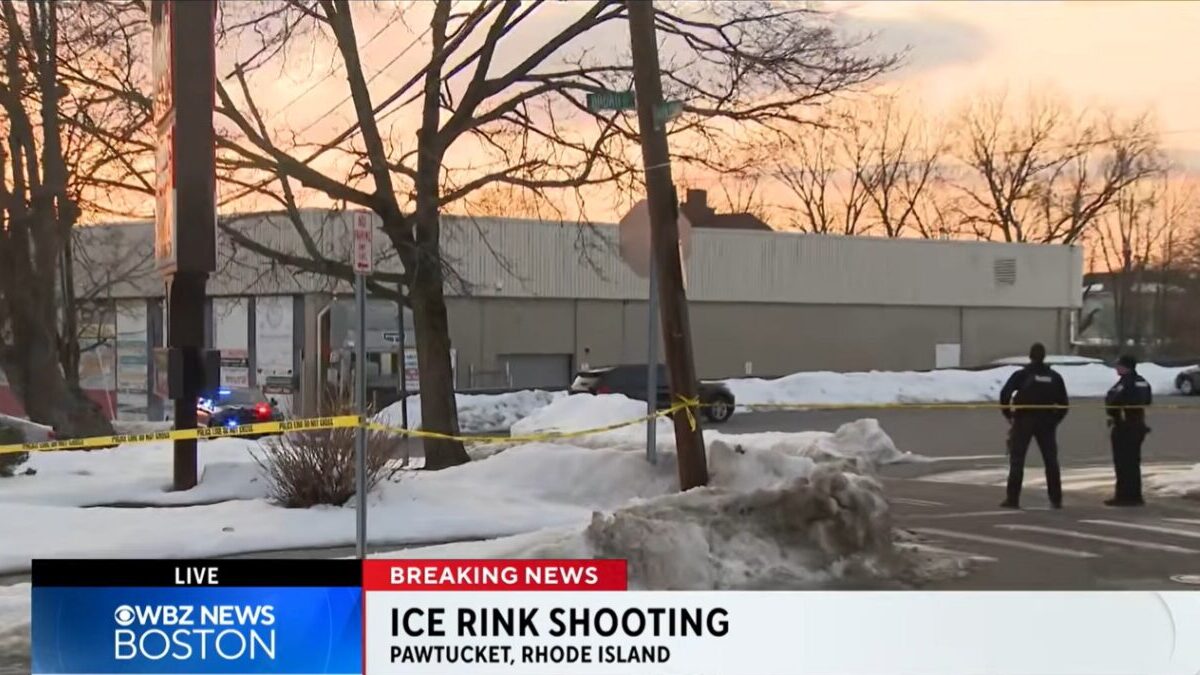
| CBS BOSTON/YOUTUBE SCREENSHOT |
If we want serious solutions to mass public violence, we must first confront the facts honestly and debate them openly.
We’re repeatedly told that transgender-identifying individuals are not prone to commit gun violence. Major outlets — including the The New York Times, AP, CNN, and The Washington Post — publish articles arguing that transgender attacks are extremely rare and run headlines calling out conservative bias: “The right exploits Nashville shooting to escalate anti-trans rhetoric” and “Conservatives use Minneapolis shooting in anti-transgender campaigns.”In the wake of the attacks in Canada and Pawtucket, Rhode Island, over the past couple of weeks, public debate has once again focused on transgender murderers. But the AP, CNN, ABC News, NBC News, MS Now, and the New York Times never mentioned the Rhode Island shooter identified as transgender. AP never mentioned the Canadian mass murderer was transgender. Other transgender-identifying people recently also posed serious threats even though they never got a chance to fire a shot. For example, Nicholas Roske, who now identifies as transgender, attempted to murder Supreme Court Justice Brett Kavanaugh and took concrete steps toward carrying out the attack before authorities stopped him.
The media, however, continues to make basic statistical mistakes in claiming transgender-identifying people aren’t disproportionately violent. Transgender-identifying shooters commit mass public shootings and active shootings at rates far above their share of the population. In 2024, for example, transgender-identifying individuals accounted for a share of active shooter attacks that was at least 12 times larger than their share of the population.
Statistical Errors and Broad Definitions
Outlets ranging from PolitiFact to AP make a key error when they report only the transgender share of attacks without adjusting for the group’s small share of the overall population. That is an obvious statistical mistake. If a group makes up just 1 percent of the population but commits 10 percent of the attacks, no one would dismiss that disparity simply because the group accounts for “only” 10 percent of active shooting incidents.
Publications such as AP and Snopes also rely on overly broad definitions of shootings. They include incidents that differ fundamentally from the types of attacks committed by transgender-identifying individuals. For example, the Gun Violence Archive classifies as “mass shootings” many incidents that primarily involve gang fights over drug turf and, to a lesser extent, crimes such as robberies. While researchers may reasonably study those incidents, they differ sharply from cases in which an individual enters a public location with the explicit goal of murdering and injuring as many people as possible to generate publicity.
Mass public shooters repeatedly state their intent to kill more people in order to attract greater attention. Gang members and robbers, by contrast, pursue entirely different motives. By lumping together gang fights and robberies with targeted mass public shootings, analysts make attacks by transgender-identifying people appear rarer than they actually are. Researchers should compare transgender-identifying attackers to perpetrators of similar types of attacks. Few would argue that gang turf wars share the same motivations — or require the same solutions — as mass public shootings.
Accurate Analysis
The FBI’s active shooting reports focus on shootings that occur in public and explicitly exclude other underlying crimes such as gang disputes or robberies. Traditionally, the FBI has classified a “mass” killing as the murder of four or more people, and academic studies have adopted similar definitions. I use that same definition (with additional details available here) and analyze both mass public shootings — defined as active shootings involving four or more victims murdered — and active shootings more broadly. --->READ MORE HERE



No comments:
Post a Comment