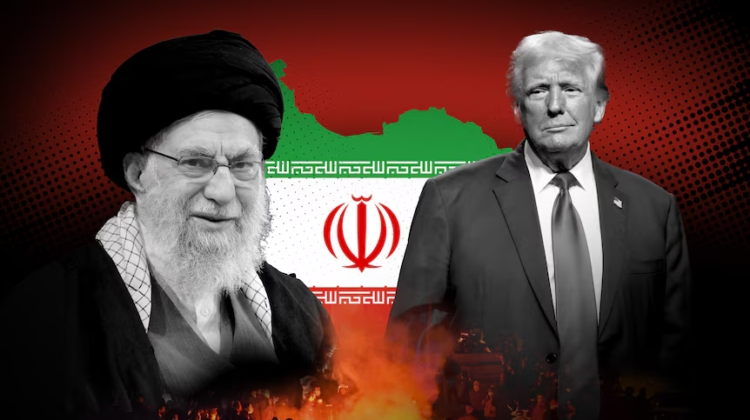
Trump shouldn’t put off what the Islamic Republic deserves any longer.
For nearly half a century, the theocratic leaders of Iran have waged war against the “infidel” West, especially the U.S. and Israel, dubbed the “the big Satan” and “the little Satan.” The Mullas’ malign intentions have been easy to read by their support for terrorist foreign proxy forces aimed at both enemies. Since its creation, Iran’s Mullas and their proxies with impunity have bathed their hands in American blood, as well as the blood of their own citizens. And their efforts to possess nuclear weapons, stopped for now by Donald Trump, were met by the West with useless diplomatic theater.
How is it that the country with the most powerful military in the world has let a pygmy rogue state serially murder its citizens for nearly 50 years, and thwart its interests and endanger its national security? By appeasing, feckless policies starting with Jimmy Carter and his “rules-based international moralizing” idealism, and continued by Barack Obama. Not until Donald Trump was elected president, have those blunders by Carter and Obama begun to be corrected.
Many other foreign policy missteps contributed to the loss of Iran from our side of the Cold War. One is the debacle of Vietnam, when the U.S. won the war only to lose the peace; and the other is what Henry Kissenger called the “disintegration of the CIA” that left an intelligence vacuum in Iran. The first led to a failure of national nerve known as the “Vietnam syndrome,” a political pacifism that privileged diplomatic engagement, civilizational self-loathing, and fear of using force to support a critical Cold War ally.
Carter’s moralizing foreign policy damaged our country’s deterrent power, as the Iran crisis illustrated. He also promoted the “power” of principled example over force to persuade other nations, especially our sworn enemies. Human rights, a principle of the West, was projected as a universal good, as was our Constitution. Another Western ideal, disarmament, similarly was considered universal.
These became the foundations of Carter’s foreign policy, along with acceptance of America’s limitations and guilt, predicated on the fiasco of Vietnam and the alleged depredations of the C.I.A. both at home and abroad, leading to what Kissinger called the agency’s “disintegration.”
Carter’s speeches disseminated these weak dicta around the world. In his inaugural address, for example, Carter acknowledged the nation’s “recent mistakes,” counseled Americans not to “dwell on remembered glory,” and reminded his fellow citizens that “even our great nation has its recognized limits” and can “simply do its best.” Not exactly a rousing way for a leader to fire up confidence in the citizens.
This self-loathing and hesitancy about American’s greatness was doubled-downed a few years later in the famous “malaise” speech, which insisted the country’s “commitment to human rights must be absolute,” and at the same time scolded that “we will not behave in foreign places so as to violate our rules and standards at home.” Surely our guiding principles should be ensuring our national security and pursuing our national interests, not reducing the world’s armaments rather than our enemies’ as Carter proposed.
Equally dangerous was Carter’s CIA Director Stansfield Turner’s fulfillment of Carter’s idealism. As Arthur Herman observed, “secrecy as well as human intelligence was passé; openness was the new catchphrase.”
Covert action and counterintelligence were abandoned or severely reduced rather than developing human intelligence assets. Herman added, Turner “concentrated on technical intelligence assets and attempts to run the intelligence community, ruthlessly disbanding what remained of the clandestine service,” and firing 1300 covert officers––a change that would reveal Carter’s fecklessness when the Iranian Islamic Revolution broke out, and our intelligence was lacking important information about the Ayatollah Khomeini, and the Islamic religious foundations of the revolt.
On top of that failure of imagination, the adherence to the “rules-based order of international moralism,” and Carter’s quasi-pacifism, the President’s foreign policy team seemed to lack any knowledge of Islamic doctrines and history. --->READ MORE HERE
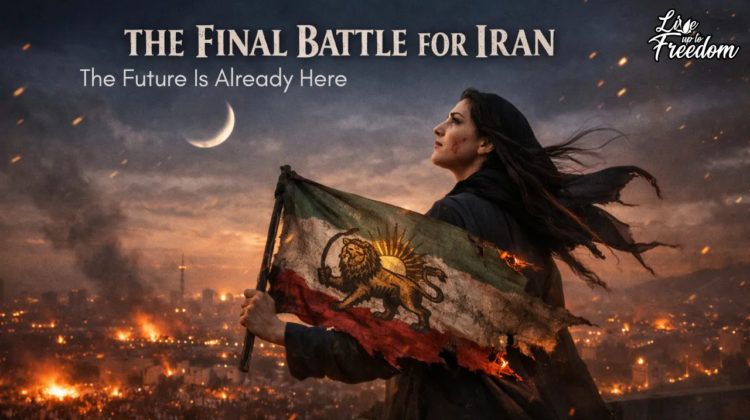
The revolution no one can ignore.
What the world is watching in Iran is not a sudden spark. It is the flame that never died from the ashes of 1979.
That year did not mark the success of a revolution. It marked the burial of freedom. Iranians were promised justice and independence. They were given a theocracy and a firing squad instead. Every uprising since has been a return to unfinished business, but this one is different. This one may be the final battle.
It’s been 17 days. Millions in the streets. More than 400 cities are involved. There’s no foreign funding. No approved slogans. No soft-spoken “opposition” figures in exile. This is raw. This is real. This is organic. This is a revolution the West didn’t design, and that’s exactly why it’s being ignored.
Over 600 people have been killed, including at least 9 children, most from gunshot wounds to the head, neck, and eyes. The regime has shut down the internet, electricity, water, and phone lines. For three full days, the country is in total blackout. Iranians are dying in silence.
Where are the emergency sessions? The UN resolutions? The press coverage? Where are the world leaders calling for regime change as they did for Iraq, Libya, or Afghanistan? Where are the journalists who swarmed Gaza? They’re not coming because this revolution isn’t a product. It’s not a color-coded project they can manage. It’s not chaos they can profit from. It’s an uprising with direction, and they don’t want it to succeed.
Because Iran is not just another country. Iran has always been the crown of the region. It borders two seas, holds two deserts, and rises across two mountain ranges. Its location connects Asia, the Middle East, and Europe. Its soil holds oil, gas, uranium, copper, gold, and rare minerals. Iran leads the world in saffron production. It sits on a major opium corridor. It has agriculture, industry, and natural defenses that few countries can match. What happens if Iran becomes free? If this regime falls and the next government is neither a puppet nor a sworn enemy. The entire game ends.
A sovereign, secular Iran led by someone with the credibility of Reza Pahlavi, someone with a legacy of making Iran strong, independent, and stable, doesn’t serve global interests. It threatens them. No more proxy wars. No more excuses for foreign military presence. No more sanctions to manipulate. Even the Islamic Republic is more useful than a restored, confident Iran, because chaos creates leverage. But a leader who can unite the people and rebuild the nation without selling it off to foreign bidders? That’s bad business.
That’s why no one is coming to help. Not the U.S., not Europe, not the media, not the UN. They’re not waiting to see if this revolution wins. They’re waiting to see if it can be hijacked like 1979. --->READ MORE HERE
If you like what you see, please "Like" and/or Follow us on FACEBOOK here, GETTR here, and TWITTER here.



No comments:
Post a Comment