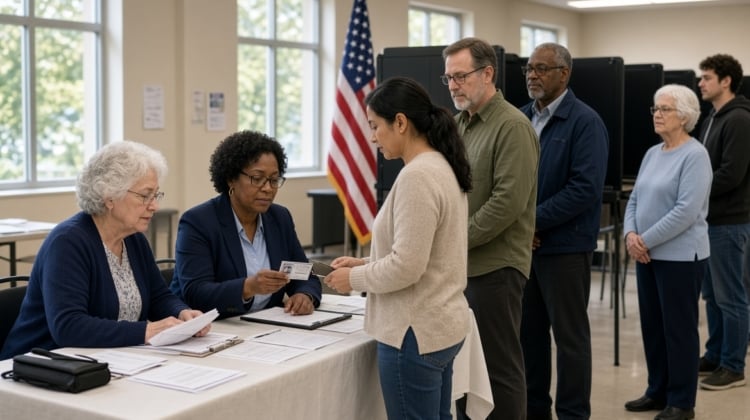
Voter ID isn’t enough.
After the 2026 elections blew out states that had some degree of election security like Texas, many are wondering what states can do to really secure their elections against fraud.It’s important to understand that there’s no way to perfectly ‘fraud-proof’ an election. Elections that take place in states with major urban centers and corrupt political machines will have some degree of fraud. Legitimate candidates always have to beat that margin of fraud to be elected.
But the less elections are secured, the wider the margin of fraud becomes, while the more they are secured, the lower the margin of fraud falls. Like any other margin of crime, such as shoplifting (which is legal in some of the same places that have high margins of fraud like California), the goal is to deter fraud with higher levels of security, transparency, and oversight.
Voter ID, a popular measure, is a crucial tool for preventing election fraud, but it’s not a one-shot solution. IDs can be faked and many illegal aliens already use fake IDs in order to illegally work. Citizenship verification needs to be an ‘end-to-end’ process that begins with registration as part of an ‘end-to-end’ approach to election security’. While implementing Voter ID is important, here’s a list of policy ideas that can provide more comprehensive election security.
And keep the margin of fraud as low as possible.
1. Citizenship Verification – The Trump administration has been asking states to use the SAVE database for verifying the citizenship of applicants and voters. A number of high-voter-fraud states like California have taken the administration to court and refused to use the SAVE database while at the same time insisting that they have no ability to verify citizenship. A number of partisan judges have tried to obstruct the use of the SAVE database for verifying voter citizenship. There is no basis for this except a partisan effort to enable voter fraud.
The SAVE database is the minimum possible standard for maintaining clean voter rolls, for verifying the citizenship of anyone registering to vote and anyone who is casting their vote.
2. Intentional Voter Registration – After the Department of Justice found thousands of non-citizens who were registered to vote or had even voted in New Jersey, California and other states, governors, activists and some of the perpetrators argued that it had been a legitimate mistake brought about by DMV voter registration. Some illegal voters claimed that they had been confused and hadn’t realized that they weren’t eligible to vote when they checked the box.
These defenses will play out in court, but they have exposed the problem with DMV voter registration. DMV voter registration has long been a dangerous tool used carelessly in states with tainted voter rolls and while critics had warned that non-citizens could easily be registered to vote, they were met with assurances by officials and administrators that it was impossible.
California, New Jersey and other states have now admitted in court and in public statements that it is very possible. And that means it’s time to move away from a mixed system where non-citizens can be asked to register to vote as part of other government functions to an intentional voter registration system where registering to vote is a conscious choice. Voter registration should not be paired with any other activity available to non-citizens to avoid such mix-ups. No one should be offered a chance to vote while visiting the DMV on other business.
Registering to vote must be safeguarded as a separate and wholly intentional process. Anyone doing it must be clearly warned that it is illegal for non-citizens to vote and must have their citizenship verified as part of the registration process. This will not only safeguard our elections, but prevent non-citizens from, as some have now claimed, accidentally committing a crime.
3. No One Should Be Voting Except the Voter – Voting is not a group activity. It is the exercise of the supreme power of the individual citizen over the government. No one should be accompanying the voter when he or she casts a ballot. If a voter cannot understand the simple instructions due to an inability to read English, the local office may choose to provide instructions in his or her foreign language, or may choose not to do so since literacy is a matter of personal civic responsibility, but there should be no ‘interpreters’ especially from politically active ‘non-profits’ there to ‘help’ foreigners vote the way that the non-profits want them to.
Voting is a civic duty and someone who is illiterate, whether due to personal ignorance or foreignness, should be asked to overcome that deficiency in order to properly exercise it.
No one should be relaying the ballot except the voter. When absentee ballots need to be cast, they can be done through the mail or, in the event of severe disability or hospitalization, through being picked up by a government employee, not through members of non-profit groups. ‘Ballot harvesting’ or any other intervention by anyone except voters or government officials corrupts the process and introduces questions about voter intent and vote tampering.
4. No ‘For-Profit’ Voter Registration – Registration must be an exclusive relationship between the voter and the government.
In recent years, there has been a boom industry in ‘voter outreach’ and ‘voter registration’. Tens of millions of dollars have been dispensed by partisan foundations to partisan ‘non-profit’ groups to register the voters they want to turn out. Despite the non-profit label, these activities consist of electioneering and should be treated that way both by the IRS and by local state agencies.
The tens of millions of dollars in funding eventually winds up with pop-up local organizations who are given a quota for registering voters. These organizations may be described as non-profit, volunteer, or grassroots, but they have personnel motivated to sign up voters in order to reap the rewards of the grant money dispensed by national groups promising to register a million or two million voters. This financial incentive for fraud is corrupting our elections.
There should be no ‘for-profit’ voter registration. Electioneering and voter registration don’t mix and partisan organizations are not trustworthy just because they claim to be non-profits Registering to vote should take place at the initiative of the voter, not of national organizations looking to make a quota and tempting locals with large sums of money to reach that goal.
5. No Masked Voters – The last time masked voters were an issue was in the era of the Klan. But between COVID and Islamization, masked voters have been making a comeback.
This year in Minnesota, an investigation into suspicious voting across different counties began when a police officer saw a woman “turning in an absentee ballot application, then returning approximately 30 minutes later to submit a ballot” and could not verify her identity “because the woman wore full head and body coverings with only her eyes visible” and then “she picked up a second absentee ballot application that had been left nearby and began filling it out”.
America has religious freedom and offers disability accommodation, but courts have also found that there are reasonable limits to both such things. There are multiple activities that require verifying an individual’s identity and masked individuals have chosen to behave in a way that makes their identity impossible to verify. If their identity cannot be verified, they cannot participate. Just as we don’t allow masked people to board planes or run for office, we should not be allowing masked individuals whose identities cannot be verified to vote in elections. --->READ THE REST HERE

No comments:
Post a Comment