New Docs Indicate Biden Admin Okayed Subpoenas Of Republicans’ Phone Records:
New details indicate high-level political appointees in the Biden administration’s DOJ actually knew of — and allowed — prosecutors’ plans to subpoena records from congressional Republicans.
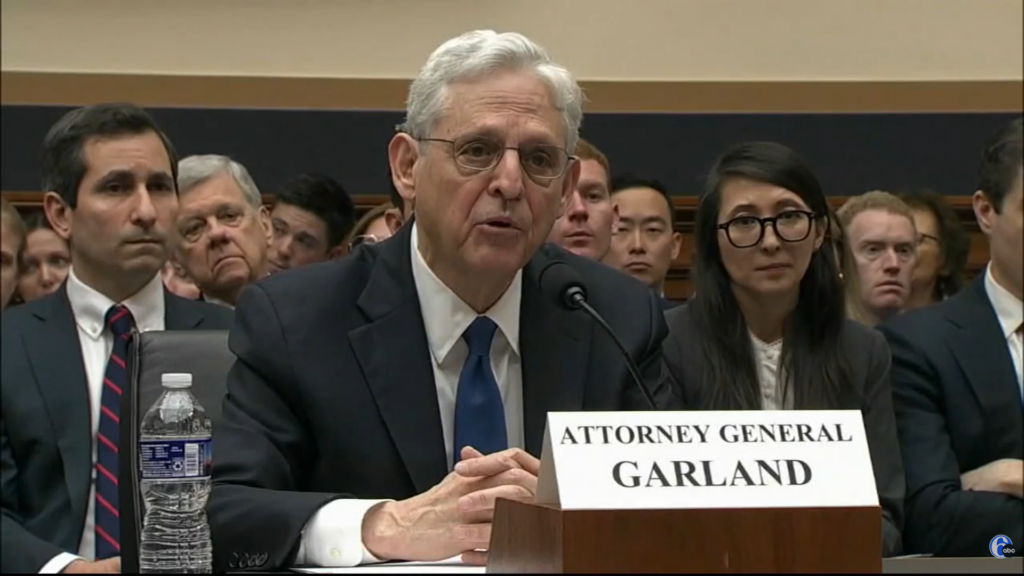
The Public Integrity Section (“PIN”) of the Department of Justice told Arctic Frost investigators to notify the deputy attorney general “via urgent report” of the FBI’s plans to subpoena Republican Rep. Jim Jordan’s toll records, repeating that directive a month later when agents sought to issue another subpoena for Rep. Chip Roy’s records. And when questioned under oath by the House Judiciary Committee, agents acknowledged they would have followed the PIN directive, indicating the Biden administration and Attorney General Merrick Garland knew of the FBI’s gross disregard of constitutional separation of powers and the Speech or Debate Clause protection afforded congressional leaders.
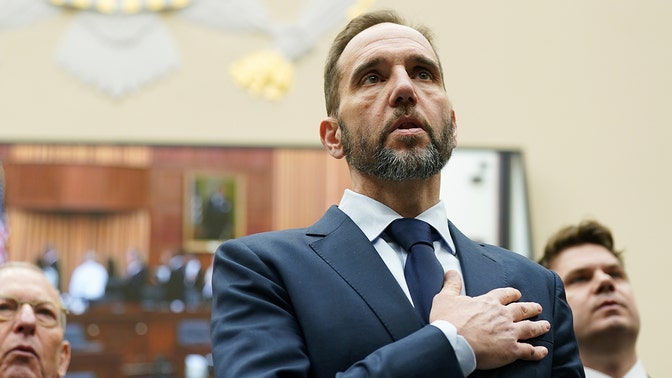
Wednesday morning, House Judiciary Committee Chair Jim Jordan released a 56-page interim report on “How Jack Smith and the Biden-Harris Department of Justice Disregarded the Separation of Powers to Spy on Their Political Opposition.” While the report summarized previously known details of the Arctic Frost investigation and Special Counsel Jack Smith’s unlawful subpoenaing of congressional toll records, Wednesday’s release reveals for the first time evidence that, prior to Smith’s appointment, a top DOJ official under the Biden administration knew of the plot to seize the records of congressional Republicans.
According to the report, “[b]eginning in May 2022, prosecutors under the leadership of U.S. Attorney for the District of Columbia Matthew Graves issued several subpoenas demanding telephone toll records for Members of Congress to identify individuals with whom they spoke around major votes in Congress . . .” Graves previously garnered headlines when news broke that he had refused to partner with the now-former U.S. attorney for Delaware, David Weiss, to bring criminal charges against Hunter Biden.
However, before subpoenaing Jordan’s toll records, Timothy Duree, then an assistant chief in the Criminal Division, reached out to PIN for guidance on the propriety of the requested subpoena. On April 26, 2022, Jennifer Clarke, a deputy chief in the PIN Section, responded by email, positing that the subpoena “arguably” does not violate the Speech or Debate Clause because it is directed to a “third-party” and involves a personal account. Clarke, however, then acknowledged D.C. Circuit precedent — because that is where the subpoena would issue from — has held that “[w]here the Clause applies its protection is absolute,” and therefore there was some “litigation risk” to the subpoena. The email then concluded: “You should also notify [the Office of Deputy Attorney General] via urgent report about legal process related to Jordan.”
According to the House Report, in a May 19, 2022 email, the PIN Section repeated its recommendation that prosecutors issue an “urgent report” to notify the Office of Deputy Attorney General (ODAG) about its intent to subpoena records related to Rep. Chip Roy.
During a transcribed interview, when asked “about notifying ODAG, Duree said he did not have a specific recollection of the interaction,” but that “[i]f [PIN] told us to notify ODAG, then I feel confident that . . . someone on my team, I or someone else, would have notified ODAG.”
These details prove explosive because they indicate high-level political appointees in the Biden administration’s DOJ actually knew of — and allowed — prosecutors to subpoena records from congressional Republicans before the appointment of Smith as special counsel. And while the Arctic Frost team sought to justify the subpoenas and hide behind the PIN approval, the controlling decision in the Rayburn case established that members of Congress have a right to be given the opportunity to assert their Speech or Debate privilege and that the Speech or Debate Clause prohibits the mere disclosure of protected legislative materials. --->READ MORE HERE
House Republicans drop Jack Smith transcripts in explosive Arctic Frost records fight:
The House Judiciary Committee published testimony from 5 prosecutors and a former DOJ watchdog agent
House Republicans released six closely watched transcripts Tuesday, offering a new-look inside former Special Counsel Jack Smith’s controversial investigation of President Donald Trump and Republican lawmakers.
Committee Republicans allege investigators improperly subpoenaed phone records belonging to more than a dozen GOP lawmakers during the Arctic Frost probe, and secured gag orders preventing lawmakers from learning the Biden-Harris Justice Department had obtained their records.
Taken together, they add substantial detail about the reasoning behind investigatory decisions — especially concerning how they approached probing lawmaker communications — as they investigated whether Trump had attempted to block the peaceful transfer of power after the 2020 election. They reveal efforts that Smith's office took to make sure the investigation followed the norms and processes that would apply to any investigation. But it also laid bare key differences in the way the investigation was practically carried out that separated it from most probes.
The documents include testimony from five members of the special prosecutor's office, including J.P. Cooney, Molly Gaston, Ray Hulser, Tad Duree and Thomas Windom, all members of Smith's team. The released files also include testimony from Brian Burnett, an agent for the Office of Inspector General (OIG).
The new revelations focus especially on communications gathered from Rep. Scott Perry, R-Pa., the only lawmaker who had his phone seized as a part of the investigation.
According to testimony from Smith's prosecutor, Timothy "Tad" Duree, investigators had decided to seize the phone using a warrant because of his proximity to Trump and his hand in trying to find a legal strategy to keep Trump in office after he lost. Notably, Perry was a go-between from Trump to Jeffrey Clark, the highest-ranking DOJ official willing to explore weaknesses in the 2020 election.
Duree described that warrant process as comparable to other investigations.
"If you seek to obtain something voluntarily, people can just choose not to give it to you. That's one obvious thing. But there are myriad opportunities for evidence to be altered, tampered with, deleted, added to. And in this search warrant, same as any others, it was important to me and our team to obtain evidence in a way that it was unadulterated," Duree said in his testimony. --->READ MORE HERE
If you like what you see, please "Like" and/or Follow us on FACEBOOK
here, GETTR
here, and TWITTER
here.

No comments:
Post a Comment