 |
| Crazycolbster/Wikimedia Common/CC BY-SA 4.0 |
The Federalist has assembled a list of the biggest 2026 ballot initiatives to help inform voters of what’s at stake this election season.
The 2026 midterm elections have arrived, and with them, some of the biggest policy battles in the country. In addition to hotly contested races among candidates, many voters are being asked to weigh in on pivotal statewide ballot initiatives that will govern the future of their states.While too numerous to list in one article, The Federalist has compiled the biggest measures on the 2026 ballot to help inform voters of what’s at stake this election season.
Abortion
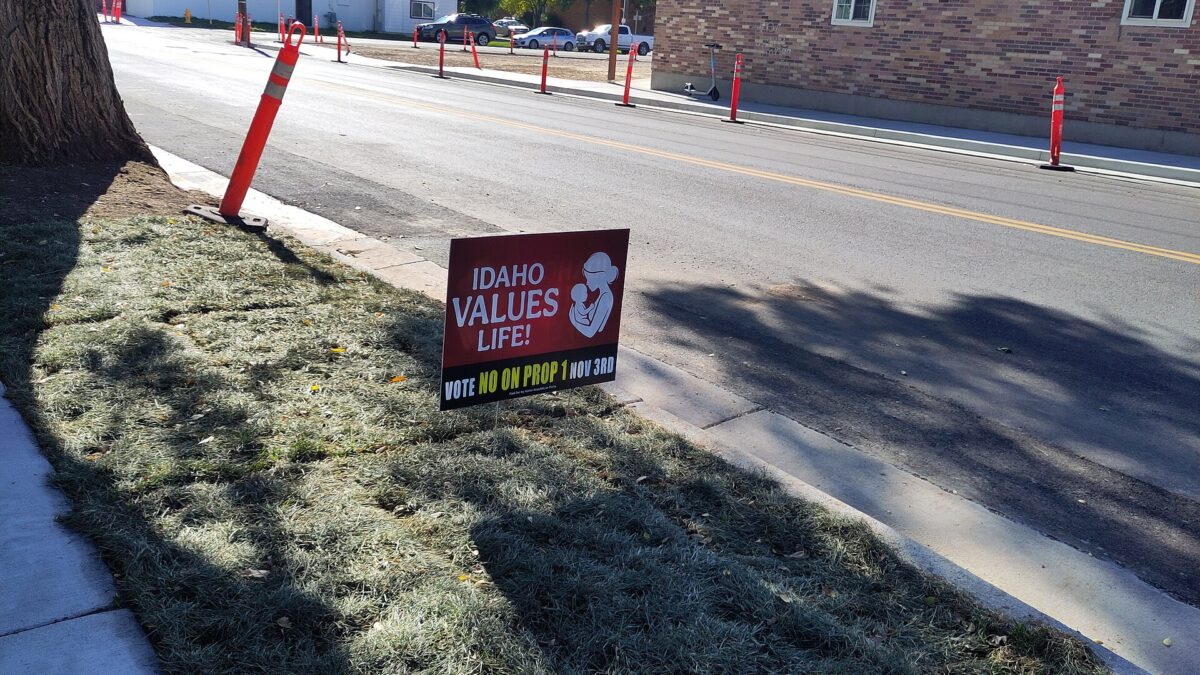
In Idaho, state law criminalizes abortion except in cases of documented rape, incest, or danger to a mother’s life. Proposition 1 seeks to create a vague “right to reproductive freedom and privacy” for “every person.” The ballot measure would redefine “medical emergency,” allow anyone — not just licensed health care providers — to perform abortions, and remove punishment for those who perform abortions. Opponents of Prop 1 warn that its expanded definition of fetal viability could “block lifesaving care” for babies born prematurely and open the door for “painful, late-term abortions.”
64 Idaho doctors have now signed an open letter opposing Prop 1. Listen to the facts, not the rhetoric. Prop 1 is too extreme for Idaho. Vote no! https://t.co/LxHqWQEXtc
— Idaho GOP (@IdahoGOP) September 29, 2026In Nevada, voters already supported a ballot question to enshrine unlimited abortion in their state constitution in 2024 after left-wing activists flooded their ballot measure battles with dark money. In accordance with state law, however, voters must reexamine and approve Question 6 again in 2026 for a “fundamental right to an abortion” to be adopted. Abortion in Nevada is currently permitted at any point of pregnancy as long as “the physician has reasonable cause to believe an abortion is necessary to preserve the life or health of the pregnant person.”
In Virginia, Constitutional Amendment Question 1 was pitched to commonwealth voters as a means to protect their freedom to make decisions about “prenatal care, childbirth, postpartum care, birth control, abortion, miscarriage management, and fertility care.” In reality, if passed, Question 1 enshrines underage abortions by unlicensed butchers, surrogacy, transgenderism, and unlimited abortion until birth in the state constitution.
As Jordan Sekulow, the executive director of the American Center for Law and Justice, recently noted, the Virginia ballot might claim that third-trimester restrictions “could apply unless the patient’s ‘health is at risk,'” but “the actual constitutional language specifically protects abortions that a physician determines are medically indicated to protect the woman’s ‘physical or mental health’ — an extremely broad standard.”
[READ: Amendments Would Put Surrogacy, Transgenderism, And Abortion Up To Birth In Virginia Constitution]
Meanwhile, Missouri voters will consider Amendment 3, which seeks to repeal the state’s recent pro-abortion constitutional amendment passed by voters. The first Amendment 3, a controversial and legally questionable “right to reproductive freedom,” narrowly passed in November 2024, 51.6 percent to 48.4 percent. Activists quickly weaponized the sweeping language to target parental consent protections for minors seeking to abort a baby, which requires parental permission or an explicit judicial override under Missouri law.
The 2026 election’s Amendment 3 asks Missourians to repeal the 2024 constitutional amendment. The text also clarifies exceptions for abortions and, in an effort to counter disinformation, confirms treatment for “miscarriages, ectopic pregnancies, and other medical emergencies” is not prohibited. Amendment 3 also “prohibits gender transition surgeries and the prescription of cross-sex hormones or puberty-blocking drugs to minors.”
Elections
In Alaska (Measure 3), Arizona (Proposition 144), Arkansas (Issue 1), Kansas, South Dakota (Amendment J), and West Virginia, voters will be asked to consider measures specifying that only qualified U.S. citizens may vote in their respective elections. The Arizona amendment also includes a requirement that voters show an approved form of ID to vote, a ban on foreign national money in elections, and a guaranteed right for voters to have their ballot tabulated at their voting location on Election Day.
Arizona is hardly the only state set to weigh a ballot initiative supportive of voter ID requirements, however.
In California, voters will consider Proposition 39, which would mandate that voters present a valid form of government-issued ID when voting in person or “the last four digits of a unique identifying number from government-issued identification that matches the one designated by the voter for their voter registration” when voting by mail. The measure also includes language specifying that election officials have a “duty” to maintain accurate voter rolls and that they must “use best efforts to verify citizenship attestations using government data, and shall annually report what percentage of each county’s voter rolls have been citizenship-verified.”
Other states with pro-voter ID measures on the 2026 ballot are Colorado (Amendment 84), Nevada (Question 7), North Carolina, and Ohio (Issue 3). (Much like their aforementioned abortion amendment, Nevada’s voter ID measure was passed by voters in 2024 but requires approval once again this year in order to be ratified.)
North Dakota (Measure 1) and South Dakota (Amendment L) will each have constitutional amendment proposals asking voters to reform their referendum practices. The initiatives seek to increase the threshold for amending their state constitutions by requiring that any proposed amendment receive support from at least 60 percent of voters as opposed to a simple majority.
Meanwhile, Alaska voters will also be voting on Measure 2, which seeks to repeal the state’s ranked-choice voting system for elections. In RCV, voters rank candidates in order of preference. If no candidate receives more than 50 percent of first-choice votes in the first round of voting, the last-place finisher is eliminated, and his votes are reallocated to the voter’s second-choice candidate. This process continues until one candidate receives a majority of votes.
Alaska voters attempted to repeal RCV in 2024 but failed to do so by fewer than 700 votes after out-of-state dark money flooded the state to defeat such efforts. The system was enacted in 2020 with support from allies of Sen. Lisa Murkowski, R-Alaska, who survived a 2022 primary challenge thanks to RCV. The system has now put the Last Frontier State’s 2026 Senate race and other state contests in play for Democrats.
Massachusetts is also asking voters to alter its primaries. If approved, Question 3 would lead to the adoption of a top two primary system for state elections, in which all candidates run on the same ticket and the top two vote-getters — regardless of party — advance to the general election. The proposal appears geared toward boxing Republican candidates out of general election contests for state races.
Redistricting
After the U.S. Supreme Court nuked states’ ability to engage in race-based redistricting earlier this year, several states moved to alter their congressional maps ahead of the 2026 midterms. Now, other states are asking voters to weigh in on redistricting matters that will affect future elections. --->READ LOTS MORE HERE

No comments:
Post a Comment