 |
| AP ARCHIVE/YOUTUBE |
What you will not find in the defense memorandum arguing for dismissal is a discussion of the allegations that the SPLC opened bank accounts in the names of businesses that didn’t exist, giving false statements to banks in order to open the accounts.
In a 390-page Tuesday filing, lawyers for the Southern Poverty Law Center have asked a federal judge to throw out felony charges of wire fraud, making false statements to a bank, and money laundering. You can read the indictment here, and the defense memorandum arguing for dismissal here (without the hundreds of pages of exhibits that accompanied the motion).
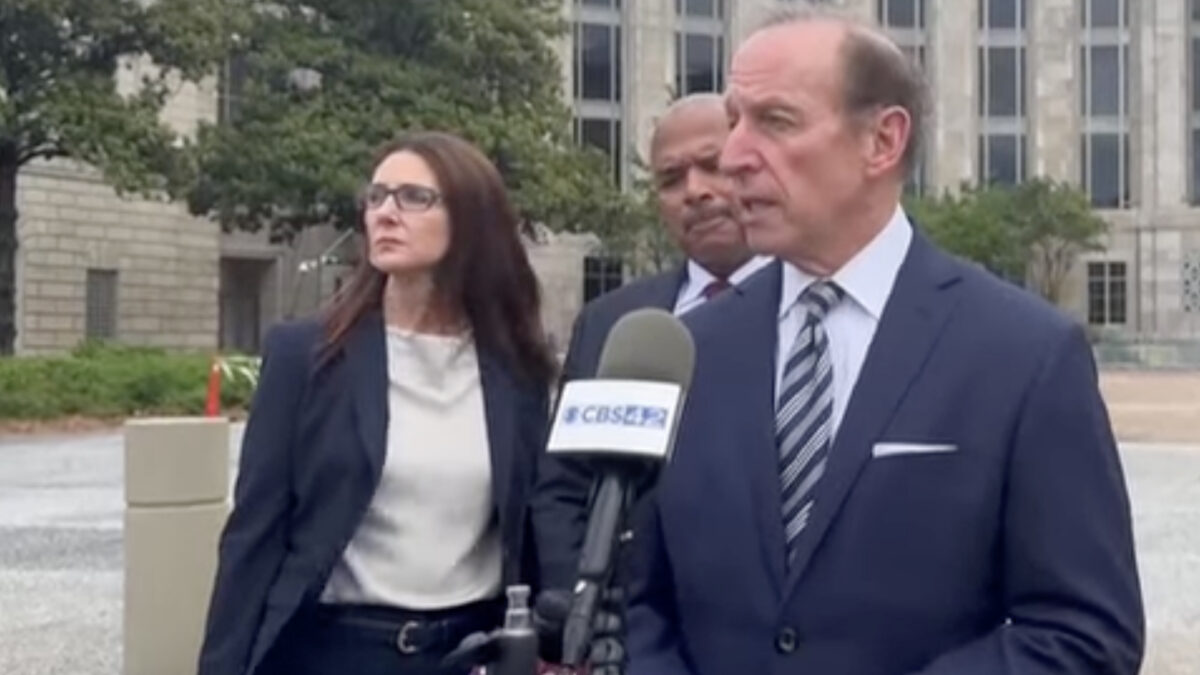
Now represented by nine lawyers at three law firms, including Hunter Biden lawyer and D.C. fixer Abbe Lowell, the SPLC argues that it’s the victim of vindictive prosecution. They charge that “this Administration’s animus over the past year culminated in the criminal charges against the SPLC — an indictment premised on conclusory accusations but devoid of provable facts or a proper statement of the law.”
In fact, as The Federalist has reported, experts in money laundering investigations have described the allegations as straightforward descriptions of wire fraud and an organization making false statements to banks, concluding that the indictment alleges obvious crimes if the fact claims in the document can be proved in court.
Among other allegations, federal prosecutors allege that the SPLC opened bank accounts in the names of companies that have never existed or conducted legitimate business. The indictment also alleged that SPLC officials responded to a bank investigation by acknowledging to the bank, in writing and over the signature of SPLC leaders, that the accounts for fake businesses had been opened by the SPLC. The SPLC has due process rights and is entitled to a presumption of innocence, but if the indictment correctly describes that letter, a legal expert has previously described the letter to The Federalist as “an admission of fraud against the bank.”
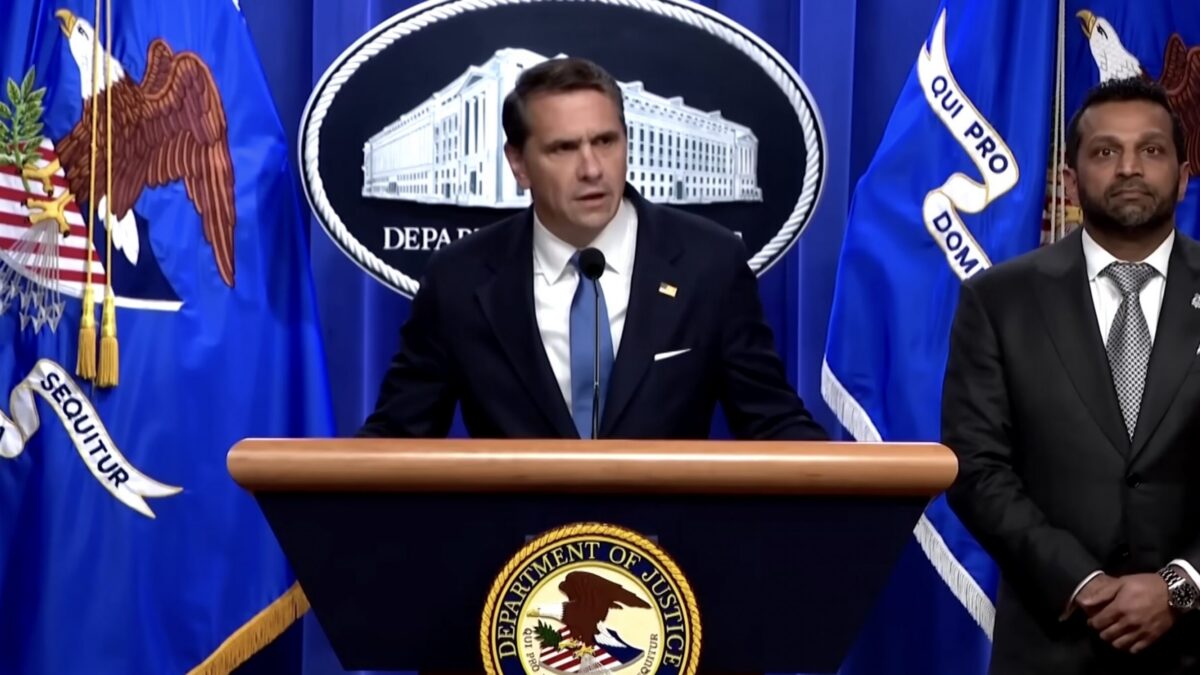
The memorandum filed on Tuesday by the SPLC doesn’t mention any of that, ignoring the substance of the charges to focus on Donald Trump’s personal tendency toward meanness. Sample argument, from pg. 9 of the PDF file linked above (which is pg. 4 of the memorandum): “After the indictment, the Administration’s assault on the SPLC’s free speech rights continued. President Trump, Acting Attorney General Todd Blanche, Deputy Associate Attorney General Aakash Singh, and FBI Director Kash Patel spoke at press conferences and televised interviews.”
That’s the heart of the argument: The SPLC can’t be prosecuted because federal officials held press conferences, which supposedly proves unlawful and vindictive targeting.
The memorandum goes on to frame the indictment as an attempt to intimidate a political enemy, again evading discussion of the actual charges: “The attempts by President Trump to muzzle and intimidate the SPLC did not deter it from carrying out its mission. The SPLC continued to publicly criticize and challenge many of the Administration’s policies.” You’ll find that quote on pg. 11 of the memorandum, which is pg. 16 of the linked PDF file. --->READ MORE HERE
 |
| REUTERS/YOUTUBE |
‘That’s certainly an admission of fraud against the bank,’ Byrnes told The Federalist.
Professionals who have experience with anti-money laundering laws are not shocked by the indictment of the Southern Poverty Law Center (SPLC). If the facts alleged in the indictment are true, they appear to support charges that are unremarkable and to be expected. Those allegations also strongly suggest the possibility of more indictments.That reaction isn’t the loudest response, right now. Indicted for fraud, making false statements to a bank, and conspiracy to commit money laundering, the SPLC is hinting broadly at a victimhood defense about being a left-wing organization politically targeted by a right-wing administration. Among the army of lawyers the SPLC has hired from multiple law firms, the racial justice nonprofit is now represented by the D.C. insider Abbe Lowell, who also represented Hunter Biden. Reuters describes Lowell’s boutique law firm as one that works “defending Trump targets.”
Spreading the victimhood narrative, journalists in legacy media are suggesting that the prosecution is a faked-up political hit built on shaky legal ground; MS Now calls the charges “nakedly political.” Joining that chorus, Chicago Tribune columnist Clarence Page reads undertones of menace in an indictment that he describes as “murky.”
It’s not murky. You can read the indictment here. Among other things, the SPLC is accused of creating accounts at two banks for fake businesses that “were never incorporated, had no bona fide employees, and conducted no actual business.”
That’s hard to do. The Bank Secrecy Act of 1970, updated after 9/11, creates extensive anti-money laundering “know your customer” rules that require banks to identify new customers and be sure a business is both real and representing its activities in an honest way. You can read the regulatory requirement for a “customer identification program” yourself, and look at bank websites to see what kinds of documents you have to show a bank to open a new business account: articles of incorporation, tax forms, permits, personal identification to show who is opening the account, and so on.
Kevin Sullivan is a retired New York State Police detective who served on multijurisdictional fraud task force investigations, and is also the author of an anti-money laundering (AML) guidebook for businesses. In retirement from law enforcement, he’s the president of an AML training academy. An investigation into allegedly fake bank accounts, he told The Federalist, has to start with a basic question: “How the heck did these businesses obtain an account in the first place?”
Well before anyone could begin using bank accounts in questionable ways, Sullivan said, “warning signs should have appeared at the account opening due diligence phase. Prospective banking customers that lacked appropriate verifying information, such as, never incorporated, no bona fide employees and no actual business, should never have been accepted as a customer by any financial institution.”
One of a short list of things has to have happened, the Texas A&M law professor and AML scholar William Byrnes told The Federalist, if the SPLC opened bank accounts for businesses that didn’t exist: banks ignored their legal obligations and opened accounts without knowing their customers, banks had insiders who sneaked around the requirement because of a relationship with the people opening the fake accounts, or the people opening the fake accounts showed the bank forged business documents.
“If the allegation is correct,” Byrnes told The Federalist, “then it’s one of those three.”
Speaking to those possibilities, the indictment specifically alleges that the bank accounts were associated with fake documents delivered by SPLC employees: “Employee-1, and others, signed these documents containing false and misleading statements for the benefit of the SPLC.”
In any case, the documents that were allegedly used to open the accounts would be retained by the banks. Regulators routinely visit banks to check on their compliance with “know your customer” laws, Byrnes says, and to evaluate a bank’s recordkeeping on customers. Whatever paperwork the bank had when they opened the SPLC’s allegedly fake business accounts would still be on hand for federal prosecutors to use in court. --->READ MORE HERE

No comments:
Post a Comment