 |
| Travelbusy.com/Flickr/CC BY 2.0 |
When people show up willing to work, with skills and values that fit with the country they’re joining, the results speak for themselves.
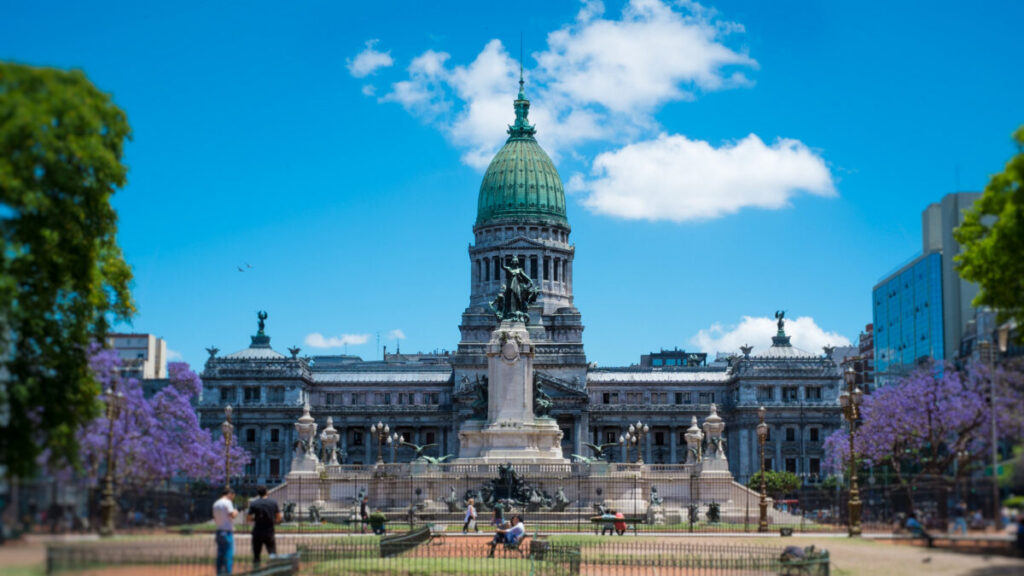
My maternal grandfather spent part of his childhood in Colonia Mauricio, a small town in the province of Buenos Aires, Argentina, founded in the late 19th century by the Jewish Colonization Association to shelter Jews fleeing pogroms in the Russian Empire. It was a community of Jewish gauchos — farmers, horsemen, men of the land — who built synagogues and schools in the middle of the Argentine pampas. My grandmother, the fifth daughter of a couple from Odessa, in Ukraine, was born in Buenos Aires itself. Both grew up in a country that wanted them, needed them, and had decided — with a clarity of vision rare in the history of nations — exactly what kind of immigrants it was seeking.That vision came from Juan Bautista Alberdi, an Argentine jurist who in 1852 wrote, from his exile in Chile, the book that would shape his country’s future. His argument was simple: the territory was enormous, the population almost nonexistent, and the only path to prosperity was to attract European immigrants who would bring capital, skills, and the working habits of more advanced societies. The following year that idea became law. Article 25 of the 1853 Constitution — unchanged to this day — made it the federal government’s obligation to actively encourage European immigration. It worked beyond anyone’s expectations. In 1880, Argentina had barely 3 million people and a per capita GDP worth 35 percent of that of the United States. By 1913, its income per person had overtaken Germany, France, Austria, Sweden, and Italy. Between 1880 and 1930, the population went from 3.4 to 11 million. Italians, Spaniards, Central European Jews, Welsh, Germans, English, Lebanese Christians: they came, they stayed, they built. In half a century, what Alberdi had called a desert was one of the ten richest countries on earth. What came after — Peronism, a century of bad decisions, squandered inheritance — is a different story, one that Javier Milei is now trying to rewrite.
The point isn’t that Argentina is some unique case. It’s that the United States, at its best, proves the same thing: good immigration works. When people show up willing to work, with useful skills and values that fit reasonably well with the country they’re joining, the results speak for themselves.
Not all Immigration is the Same
What the left refuses to acknowledge — and what Alberdi understood perfectly well 175 years ago — is that not all immigration is the same. Countries have not just the right but the responsibility to choose who comes in. When Alberdi talked about bringing “living pieces of the customs” of advanced nations to Argentina, he wasn’t being bigoted. He was being clear-eyed. A South Korean immigrant and a Somali immigrant do not have the same impact on a receiving society. Not because of race — because of culture, institutions, and history.
In Switzerland, immigrants from Germany, France, and Austria commit crimes at rates 60 to 80 percent below the Swiss average, according to their Federal Statistical Office. Immigrants from certain North African countries commit them at six times the national rate. In Sweden, peer-reviewed studies tracking two decades of data have found a persistent link between immigrant origin and crime rates, even after adjusting for income and education.
The Scrapped National Origins Formula
America has been here before — and blew it. The Immigration and Nationality Act of 1965, Hart-Celler, scrapped the national origins formula that had shaped American immigration policy since the 1920s. That system had real problems. But it also recognized something true: that cultural fit matters, that a country has a legitimate stake in who joins it.
Hart-Celler swapped it for a family reunification model that gradually, then dramatically, shifted immigration away from Europe and toward the developing world. The people who wrote it swore it wouldn’t change the country’s ethnic makeup. It did — completely, permanently — and nobody had an honest conversation about what that would mean. We’re still not having it.
Democrats’ Open Borders --->READ MORE HERE

No comments:
Post a Comment