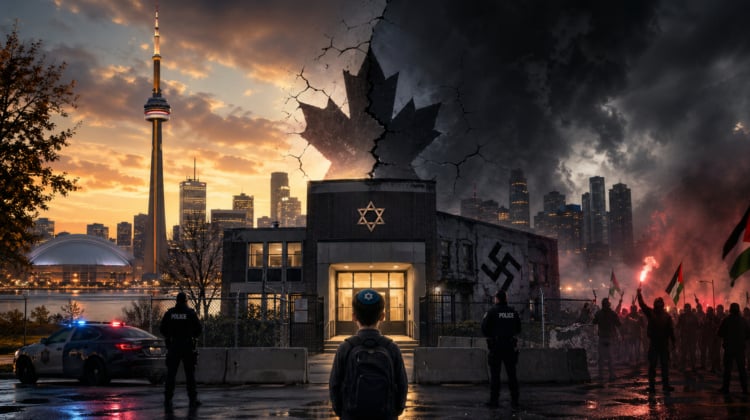
What could go wrong with letting the jackals into the hen house?
“The preconceived opinion which they brought to the Bench was evidently this: ‘Dreyfus has been condemned… he is therefore guilty…’”
–Émile Zola, J’Accuse…!, L’Aurore (1898)At the end of the nineteenth century, France—one of the most advanced societies in Europe—convicted an innocent man of treason. Captain Alfred Dreyfus, an assimilated Jewish officer in the French Army, was publicly humiliated, stripped of his rank, and condemned to life imprisonment on Devil’s Island—one of the harshest penal colonies imaginable—for a crime he did not commit.
Captain Dreyfus’s guilt was not proven—it was presumed. The machinery of the state did not correct the injustice; it reinforced it. Evidence was suppressed, dissent was discouraged, and truth itself became the threat. It took Émile Zola to force the nation to confront what it had chosen not to see. His letter, J’Accuse…!, shook France to its core. The Dreyfus Affair is not some anomaly; it is, in fact, an enduring warning for all time.
In Toronto, the city of my birth, such a situation would once have been inconceivable. My family has lived in Toronto for over a century. My grandparents arrived in the early 1920s and never took a penny of government assistance. My grandfather worked hard every single day for Silverwood Dairy as a milkman and raised a family of five on that salary. He later was able to own a smoke shop on the Danforth. My mother was born at Toronto General, and I was raised there too—educated at Bialik Hebrew Day School, Newtonbrook Secondary School, and the University of Toronto. For most of my life, antisemitism was marginal—isolated incidents that never defined the character of the country.
Tragically, that is no longer the case. Antisemitism has now exploded and become an everyday reality in Toronto and across the country. Today, my childhood school—Bialik—requires constant armed police protection. A place once defined by learning and community now operates under the assumption of threat. This is no longer an abstract or theoretical hazard; it is a tangible, looming peril.
Reports across Canada describe antisemitism as “unprecedented.” Synagogues have been targeted, vandalized, marked with Nazi graffiti, and even shot at. Jewish communities are described as being “on edge,” while security assessments warn that attacks are now a realistic possibility. Taken individually, these incidents can be explained away; together, they form an ominous pattern. That pattern leads to a question that should never arise in a stable democracy:
Will our government defend us?
A Century of Jewish Life in Canada
Jewish roots in Canada run deep. The first synagogue was established in 1862—before Confederation. From the beginning, Jewish Canadians helped build the country’s institutions—its businesses, hospitals, cultural life, and civic society. They fought courageously in its wars and contributed to its culture: the writing of Mordecai Richler and poetry of Irving Layton, the music of Leonard Cohen, the comedy of Wayne and Shuster, and the films of David Cronenberg became a vital part of Canada’s identity.
For generations, Jewish Canadians believed they had found something rare: a country where Jewish identity and Canadian identity could coexist without conflict. As the Jewish community prospered over the years, it shared that prosperity through philanthropy, helping to build medical facilities, educational institutions, cultural activities, and the arts.
That belief in a Canadian future is now rapidly eroding. Many Jews in Canada no longer feel secure, and many are genuinely considering leaving altogether. The future for the Jewish community in Canada suddenly looks desolate.
What changed?
The Change Factor
When the first Moslems began arriving in Toronto in the mid-1980s, I remember warning my mother: “What are they doing letting these people in? One day Jewish blood will run in the streets.” Soon after, an Islamic terrorist cell was uncovered and arrested by CSIS on Bloor Street, operating under the cover of a copy shop. The threat was not theoretical—it was already present.
For many years, Canada operated on an assumption: that those who arrive will adopt the norms of our society. That assumption, however, rests on a fatal misunderstanding. Societies are not interchangeable.
When the vast majority of immigrants came from European countries, they crucially shared a common history, culture, religion, and a deep appreciation of Western civilization and its democratic liberal precepts. That was drastically challenged when the immigration doors were opened to people from countries that did not share or appreciate those treasures. In fact, many came with scarcely concealed contempt for our culture and liberal values rooted in Judeo-Christian heritage.
Many of the Islamic regions from which recent immigration has come have weak, if any, democratic traditions, limited pluralism, and entrenched antisemitism. Many Islamic countries are homogeneous Moslem societies under totalitarian monarchical rule, with absolutely no history or tradition of free speech, equality, pluralism, or liberal democracy.
Worse still, many of these societies actively promulgate hatred of Christians and Jews, wherein antisemitism in particular is an accepted norm. In Africa today, Christians are being massacred on an almost daily basis by Moslem radicals. Most critically, many of these people have absolutely no familiarity with Western culture and democratic traditions. This is not something automatically acquired through osmosis or casual exposure. A civilization and culture are like a coral reef: they form and build organically over many centuries. Hence, when large numbers of people arrive from a disparate culture without clear expectations of integration, adaptation, and acculturation, those differences do not simply disappear—they manifest in public life.
When immigration occurs at an overwhelming scale that outpaces integration, the result is not diversity but uncontrollable fragmentation. Canada has, in recent years, admitted large numbers of people from regions where antisemitism is deep-rooted and democratic norms are weaker. Without firm governmental expectations of integration, parallel communities form, and with them the importation of conflicts and hostilities that a liberal society is not equipped to absorb indefinitely.
Liberal democracies are built on specific principles—individual rights, equality before the law, and the separation of religion and state. These norms are not universal; they are historically developed and culturally sustained. What is to be done when people not only have no civilizational experience with such concepts, but often hold them in contempt? Their societies do not recognize individual rights, equality before the law, or any separation of religion and state. Islamic nations adhere strictly to the religious dictates of sharia law, which decrees the actions of the state itself.
When large numbers of people enter a society without the norms of that society being clearly defined, expected, and enforced, assimilation does not occur automatically. It is not something instinctive or inherent in the human genome, but something that evolved culturally over centuries within Western civilization. These are learned values, fermented out of centuries of common experience, history, and a Judeo-Christian tradition of respected individual rights.
Without the implementation of an immigration system that recognizes distinct and essential cultural dissimilarities, parallel communities emerge—retaining the political and cultural conflicts of their countries of origin while operating within a society that assumes those conflicts have been left behind. This is not some academic hypothesis; it has already occurred across large parts of Europe. Conflicts do not dissolve at national borders; they travel and metastasize. When governments ignore this reality, they do not preserve harmony—they import menacing instability and unrest.
The Atmosphere Today
Over the past several years, those tensions have not only become visible; demonstrations linked to Middle Eastern conflicts now specifically target Jewish institutions and neighborhoods where Jewish families have lived peacefully for decades. Radical anti-Jewish hostility—often framed as political protest—has created an atmosphere of intimidation and threat. Synagogues are now required to hire armed security, while Jewish schools must operate under special police protection. Community members speak openly of fear, harassment, violent intimidation, and the desire to flee the country. --->READ MORE HERE

No comments:
Post a Comment