 |
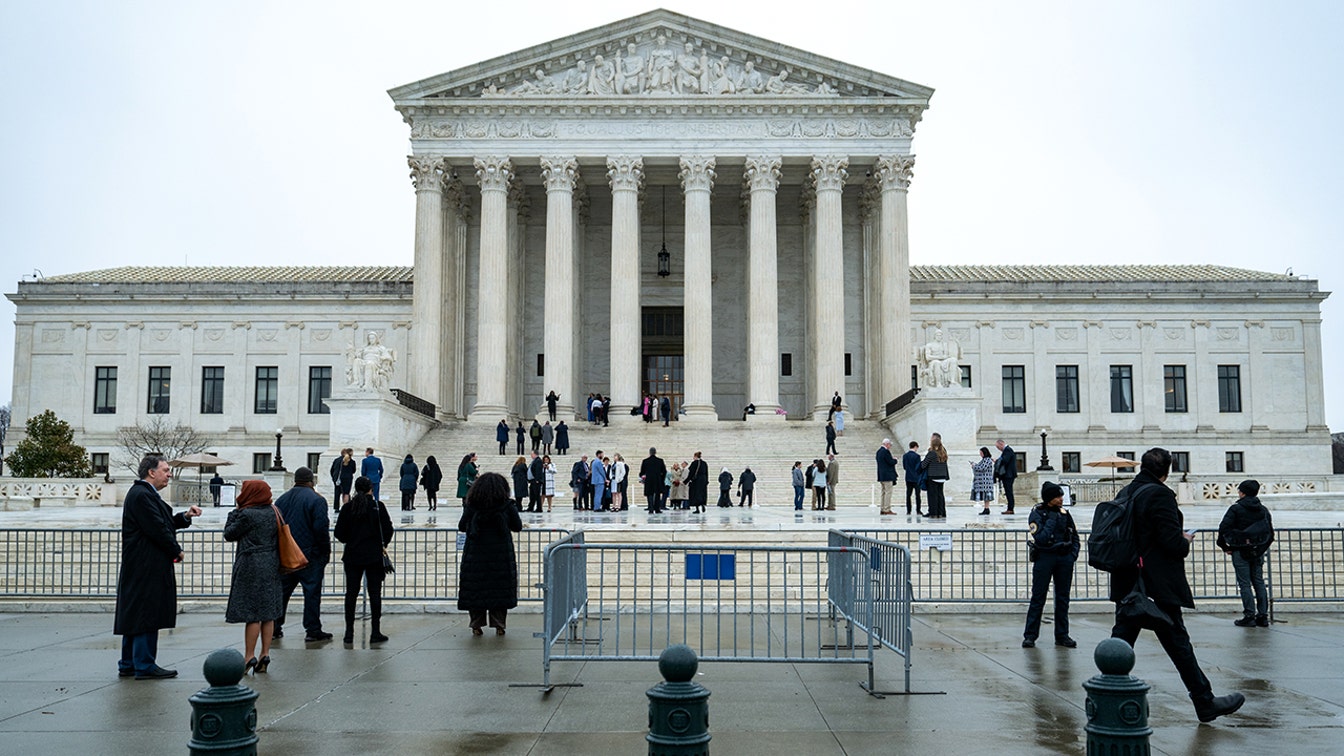
| Annabelle Gordon/Bloomberg via Getty Images |
The executive order would deny citizenship to children born after February 19, 2025 to undocumented or temporary-visa parents
The Supreme Court is poised to answer a fundamental constitutional question largely ignored for more than a century: Who qualifies as an American citizen?
The justices on Wednesday will hold oral arguments to review President Donald Trump's efforts to limit birthright citizenship in the U.S., a landmark case with the potential to upend the lives of millions of Americans and lawful residents.
At issue is the executive order the president signed on his first day back in office, which would end automatic citizenship for nearly all persons born in the U.S. to undocumented parents, or parents with lawful temporary status in the country — a seismic legal, political, and social shift that critics note would break with more than 150 years of legal precedent.
A ruling is expected within three months, but until then, Trump's plans remain on hold.
The case is the fourth of a five-part series of appeals the Supreme Court will consider this term on the merits of Trump's sweeping executive agenda.
The nine-member bench has already tossed out his reciprocal tariffs on most other countries, which relied on an economic emergency law. A separate dispute over ending protections for migrants with temporary protected status will be argued later in April.
Still pending are rulings on the president's ability to fire members of independent agencies, including Federal Reserve governors.
But the administration has been winning most of the emergency appeals at the Supreme Court since Trump took office again, which dealt only with whether challenged policies could go into effect temporarily, while the issues play out in the lower courts – including immigration, federal spending cuts, workforce reductions and transgender people in the military.
Constitutional Meaning
Trump's order now before the high court for final review would reinterpret the 14th Amendment, which states, "All persons born or naturalized in the United States, and subject to the jurisdiction thereof, are citizens of the United States and of the State wherein they reside" — a provision the president argues has been misinterpreted.
Executive Order 14160, entitled "Protecting the Meaning and Value of American Citizenship," would deny it to those born after Feb. 19, 2025, whose parents are illegal immigrants, or those who were here legally but on temporary non-immigrant visas.
And it bans federal agencies from issuing or accepting documents recognizing citizenship for those children.
"The privilege of United States citizenship is a priceless and profound gift," says part of the order. "But the Fourteenth Amendment has never been interpreted to extend citizenship universally to everyone born within the United States."
A Supreme Court ruling on the issue could have sweeping national implications for an issue Trump officials argue is a crucial component of his hardline immigration agenda, which has become a defining feature of his second White House term. --->READ MORE HERE
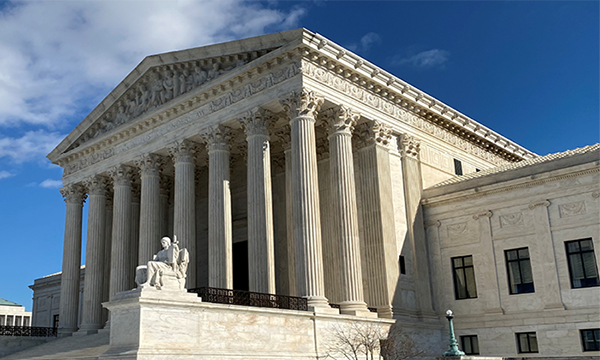
Nearly 15 months after President Donald Trump issued an executive order attempting to redefine birthright citizenship, the Supreme Court will consider the constitutionality of the administration’s action.
Since then, the birthright citizenship controversy has been working its way through the legal system in several forms. Now on April 1, 2026, the Supreme Court will hear arguments in Trump v. Barbara, which will likely settle the constitutionality of President Trump’s executive order.
Traditionally, the 14th Amendment’s Citizenship Clause has been interpreted to bestow automatic citizenship on a child born in the territory of the United States regardless of their nationality, with limited exceptions. The clause reads, “All persons born or naturalized in the United States, and subject to the jurisdiction thereof, are citizens of the United States and of the State wherein they reside.”
The clause was also a rejection of the Supreme Court’s Dred Scott v. Sandford decision from 1857, which held that African Americans could not become American citizens and had “no rights which the white man was bound to respect.”
The Supreme Court’s landmark case on birthright citizenship is United States v. Wong Kim Ark (1898). There, a divided Supreme Court held that Wong Kim Ark, who was born in San Francisco to parents who were both Chinese citizens, automatically became a United States citizen at birth.
The Trump administration is claiming another landmark Supreme Court decision, Elk v. Wilkins (1884), supports the argument that birthright citizenship should not be granted to children born to aliens illegally in the United States and to aliens on a temporary visit to the country.
The executive order’s road to the Supreme Court --->READ MORE HEREFollow link below to a relevant story:
+++++The key arguments in the birthright citizenship case+++++
If you like what you see, please "Like" and/or Follow us on FACEBOOK here, GETTR here, and TWITTER here.

No comments:
Post a Comment